Custom protective packaging · Oak Ridge, Tennessee · Since 1991 (865) 481-3801

Article

Custom Pallets: Stringer vs. Block Pallets

Block vs stringer pallets

Understanding block pallets vs stringer pallets requires more than just standard comparison. It’s important to take into account factors such as build quality and other essential considerations. Mode(s) of transportation, storage conditions, and product type all play a role in selecting an appropriate pallet. Custom-designed pallets are often the only
way to ensure your pallets are built to handle the intended use – but for standard or custom pallets, choosing between a stringer pallet vs. block pallet design is an important primary consideration.
What is a block pallet?

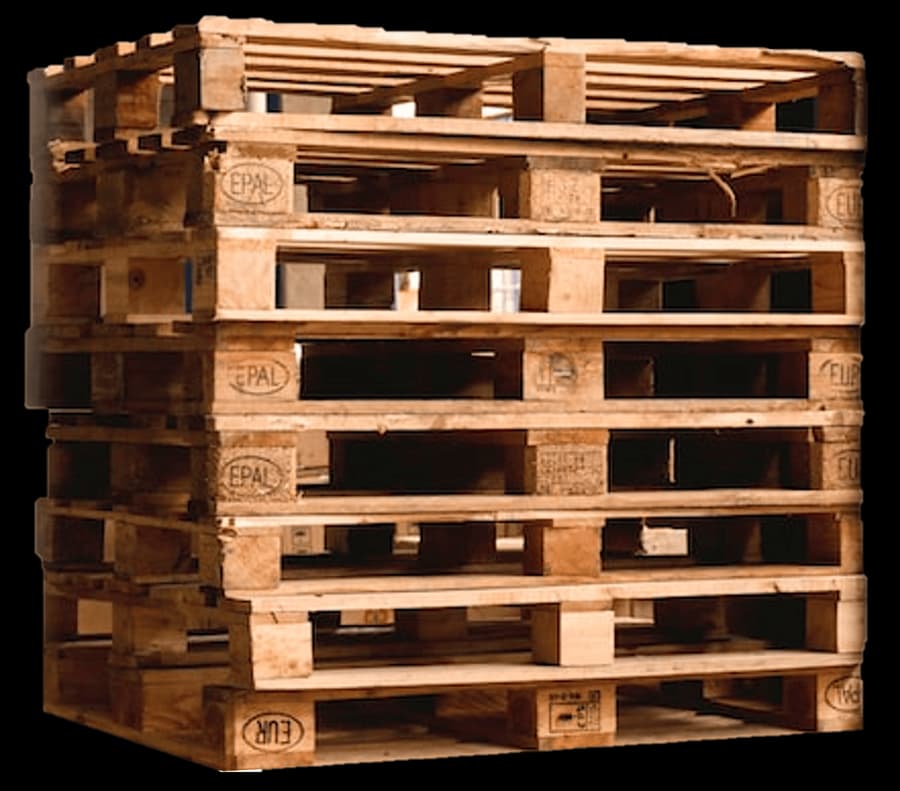
Block pallets are named for the blocks that form the pallet base. They typically consist of nine blocks: one in each corner, one in the middle of each side, and a final pallet block at the center for unit-load support. Because this configuration allows pallet jacks and forklifts to interface with a block pallet from all four sides, block pallets are sometimes referred to as four-way pallets. Block pallets may also include a bottom deck board for additional strength. The bottom deck board is typically a thin piece of lumber (usually 1”x4”s) that runs along the bottom of the blocks to make them more stable.

Stack of wooden block pallets.

What is a stringer pallet?

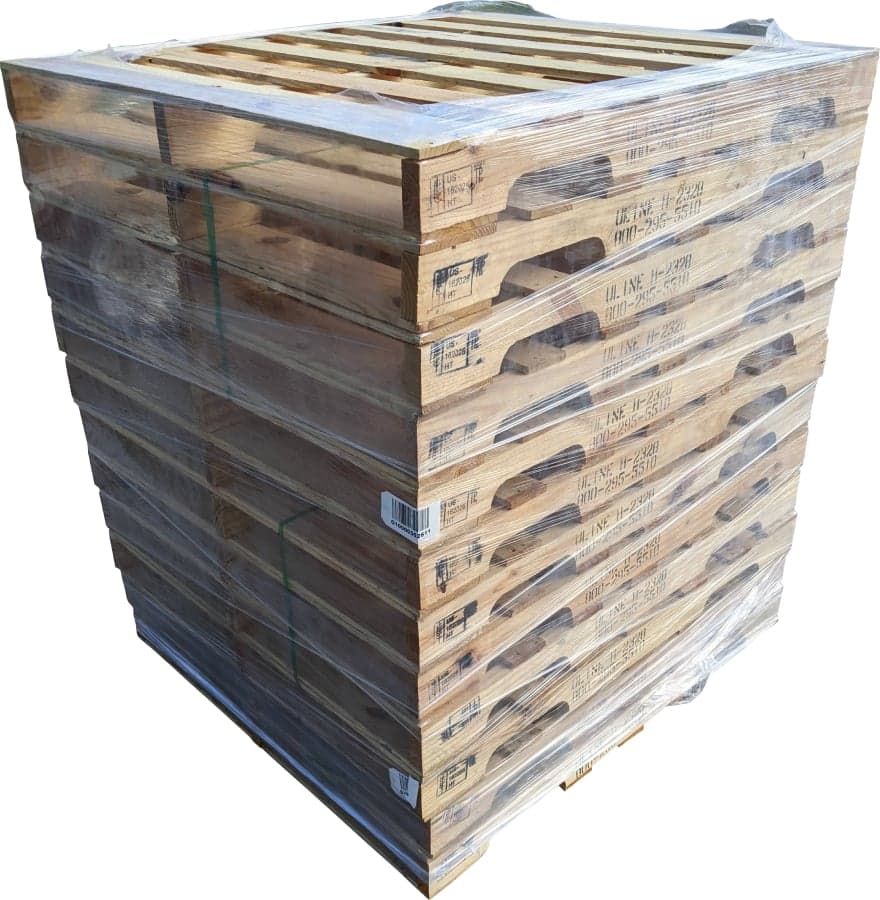
The most frequently used pallet in the United States is the stringer pallet, built with stringer boards between the upper and lower deck boards. The stringer boards (typically 2”x4”s) support the unit load, only allowing the forklift access from two sides. Thus, standard stringer pallets are often called two-way pallets. They can, however, be built as four-way pallets if the pallet stringers are notched or chamfered for forklifts or pallet jacks. Standard stringer pallets are typically 48″x40″, but they can be custom-built to almost any size.

Stack of wooden stringer pallets wrapped together.

What is stronger, a block pallet or a stringer pallet?

Choosing between a stringer pallet and a block pallet often depends on the intended use and the manufacturing quality. Generally, a stringer pallet has greater unit capacity than a block pallet of comparable dimensions and build quality. Yet poorly made stringer pallets can actually be weaker than block pallets made to higher standards. When considering a block pallet vs. stringer pallet of equal build quality, block pallets are more cost-effective and, due to their four-way configuration, easier to use. They’re preferred for lighter loads when strength isn’t as important – although string pallets deliver much heavier load capacities for the price.

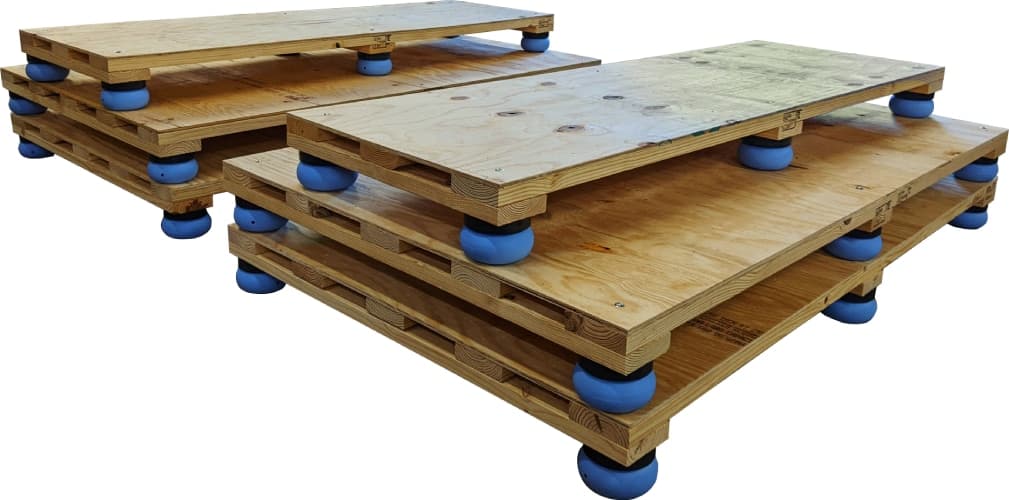
A third option is custom pallets. According to the customer’s needs, Volunteer Case & Container can build pallets of any size or shape. We’ve made pallets over 20′ long, as well as pallets that can sustain over 30,000 lbs. Our pallets can also include Skid-Mates or foam to absorb vibration and shock while providing four-way entry on any pallet type.

How to pick the best pallet for your project

Determining stringer vs block pallets for your project depends on numerous factors, such as:

  1. Product type: Different industries and product types have unique considerations for both shipment and storage. The food and beverage industry, for example, often requires pallets treated for mold or pests. Industry-specific pallet sizes and types may also be an important consideration. For greater clarity, see the International Organization for Standardization (ISO) specifications relevant to your particular industry.
  2. Unit weight: Ensure your pallet is built to sustain the weight of the intended load and be aware that custom pallets may be the only way to support heavy and/or uniquely shaped loads.
  3. Shipping destination: The pallet’s destination is also important. Stringer pallets are more common in the United States, but other countries rely more heavily on block pallets. If shipped overseas, the pallet must be certified for international export with an ISPM-15 stamp. Also, consider restrictions on size and the available lifting equipment at your destination.
  4. Strain and wear: Minimize pallet failures by considering what kind of strain the pallet load must endure, including:
    • Shipping and handling conditions
    • Shipping distances and means of transportation
    • Number and mode of transfers during transit
    • Whether pallets will be used once or repeatedly
    • Where pallets will be stored (inside or outside)
    • Whether consumers will have access to your pallets
Two stacks of plywood platforms with blue cushioning feet.

Designing a custom pallet and crate with Vol Case

Volunteer Case & Container specializes in custom crate, case, and foam solutions – and as a leading crate manufacturer with over 30 years of experience, we can create custom oversized pallets anywhere from 1′ to 40′ long. Whatever your custom pallet and crate needs are, we’d love to partner with you. For any questions or to request a quote, call (865) 481-3801 or contact us online.

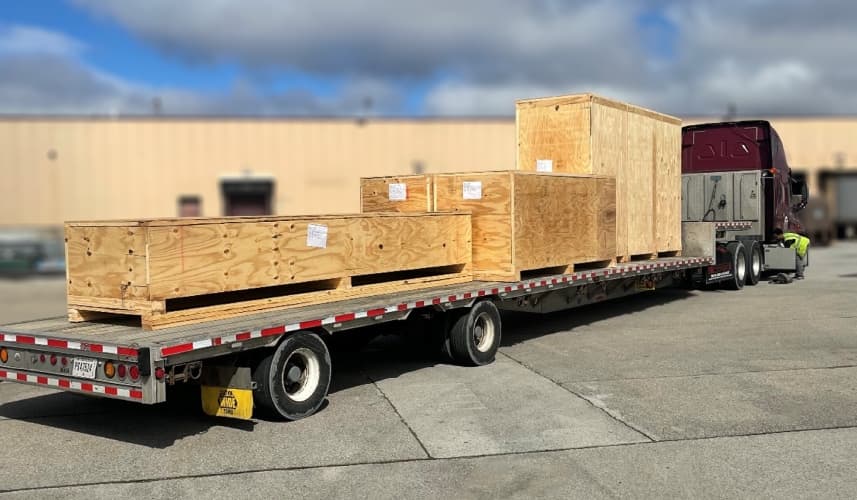
Wooden shipping crates secured on a truck trailer.
Industry Sensing Onsite
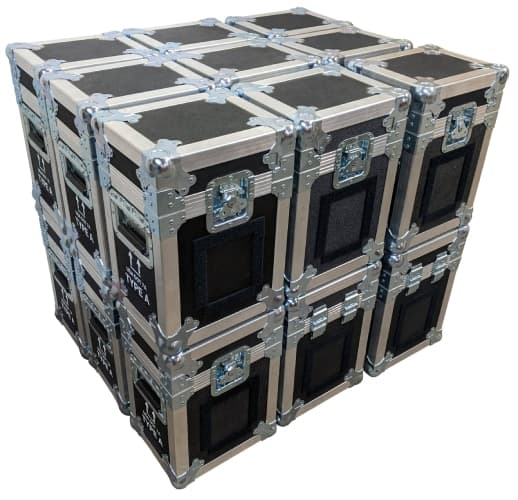
Six black ATA cases arranged in two stacked rows.
Industry Medical ATA
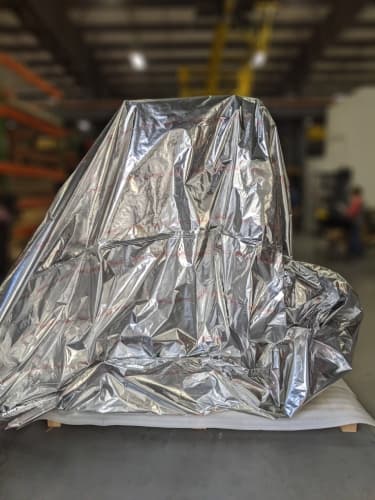
Large load wrapped in reflective protective material on a pallet inside a workshop.
Industry Aerospace Onsite
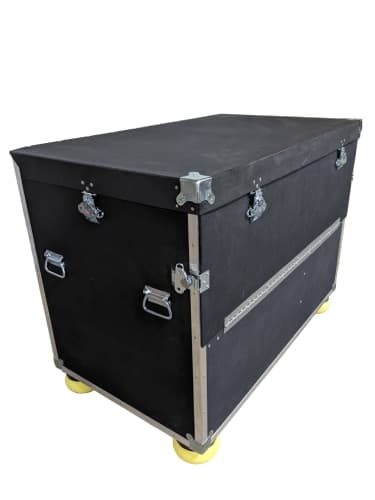
Closed black container with latches, side handles and yellow feet.
Plastic Container
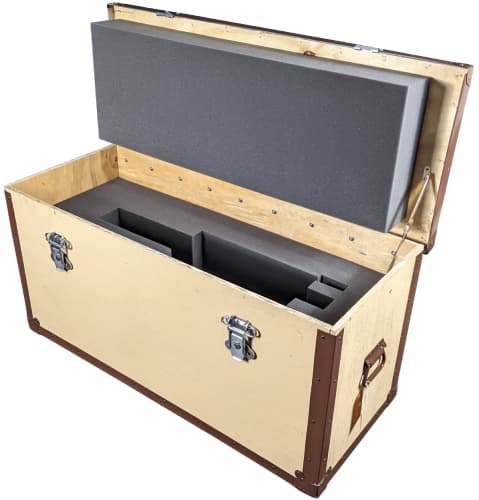
Open tan wooden case with a foam-lined lid and fitted interior.
Wood Container
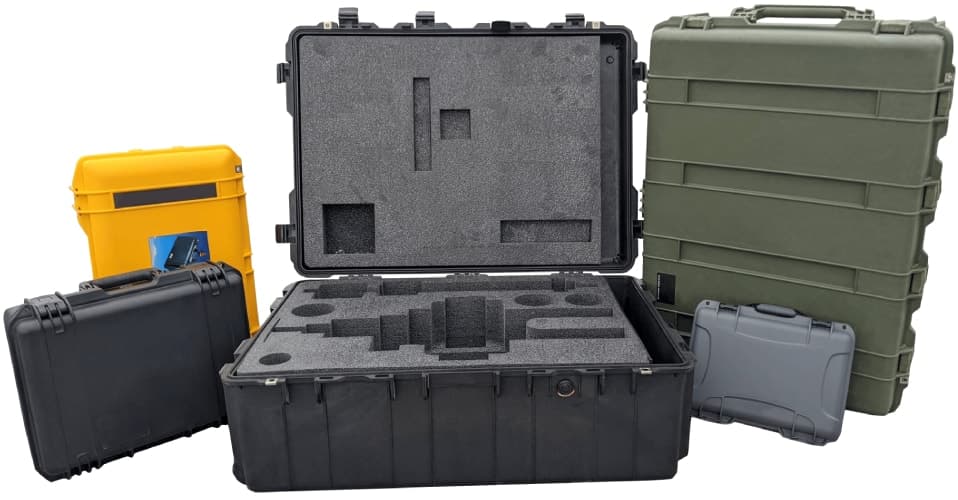
Group of hard cases in several sizes, with foam visible in the open central case.
IM Cases

About Vol Case

Volunteer Case & Container is the oldest custom crate and case manufacturer in the East TN area. Founded over 30 years ago, all of our protective packaging solutions are still designed and assembled at our facility in Oak Ridge, TN. We specialize in custom wood crates, ATA cases, wood or plastic containers, injection molded cases, and waterjet or CNC cut foam inserts. Our customers span a variety of industries including nuclear, government, aerospace, military, medical, R&D, and more. Our team has experience designing and building everything from huge wood crating for 70,000+ lbs machinery to small injection molded cases for key-sized objects. Whatever your needs, our team works on quick turnaround times to provide you with high quality protective packaging. Contact us today for a free quote.

Request a Quote

All articlesBack to top ↑

Tell us about your project

What do you
need to protect?

Tell us what you need to pack, how it will travel and when you need it. We can help you choose a case, foam insert or wood crate.

  • Free design and quoting
  • Direct access to our team
  • No obligation to purchase
Prefer to talk?(865) 481-3801

Start your project

Provide a general project description. Do not include CUI or export-controlled information.

PDF, images, CAD files, or ZIP. Up to 5 files, 20 MB each. ZIPs may contain up to 20 files, totaling 20 MB when opened. No password-protected or nested ZIPs.

Use non-sensitive sample files only. Do not attach CUI or export-controlled technical data. Contact our team to arrange an approved transfer method.