


Direct access to the design team
Our team creates and revises the 3D packaging designs in-house, so questions and changes go directly to the people developing the case, foam or crate.

Aerospace
Vol Case provides custom aerospace packaging for manufacturers, suppliers, maintenance, repair and overhaul (MRO) teams, and test labs. Our cases, foam inserts, wood crates and ATA cases are designed around aircraft components, instruments, tooling and larger assemblies for transport, storage and repeated use.
Free design & quoting. No obligation.

Packaging options
The equipment's size, weight and handling needs help determine the packaging. We supply cases and foam nationwide, and wood crates throughout the eastern United States.
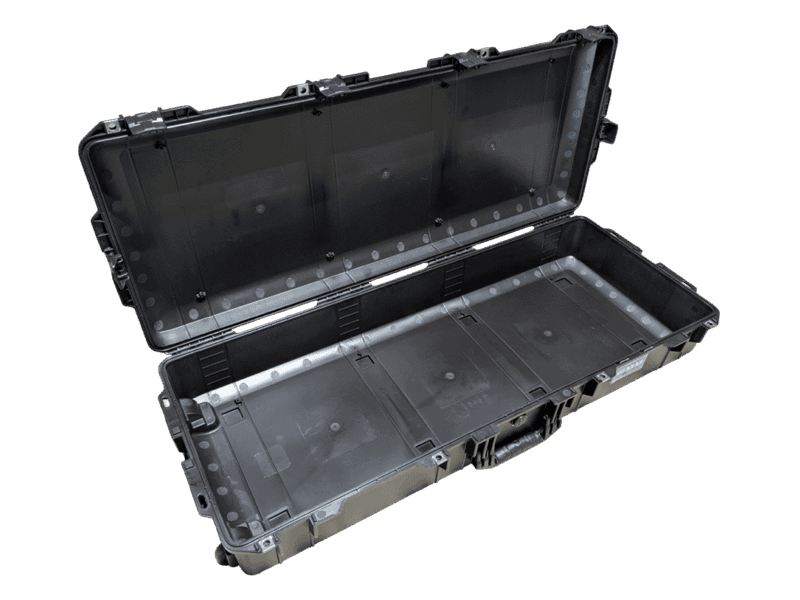
For portable instruments, avionics and maintenance tools, we help choose a case and design the interior. Brands include Pelican, SKB, NANUK and Condition 1. Order the case alone or with custom foam.
Explore cases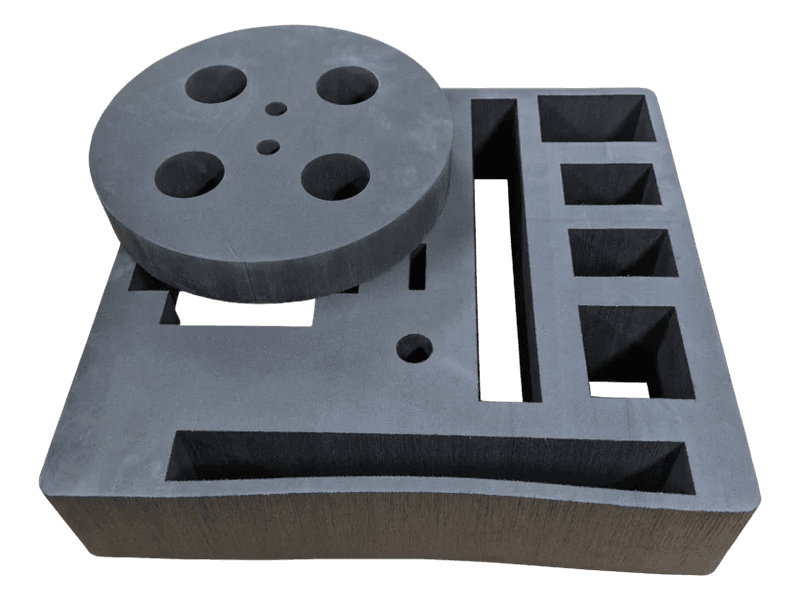
Fitted pockets hold components, tools and accessories in their assigned places. We design and cut inserts for new cases or packaging you already own. Foam-only orders are available.
Explore custom foam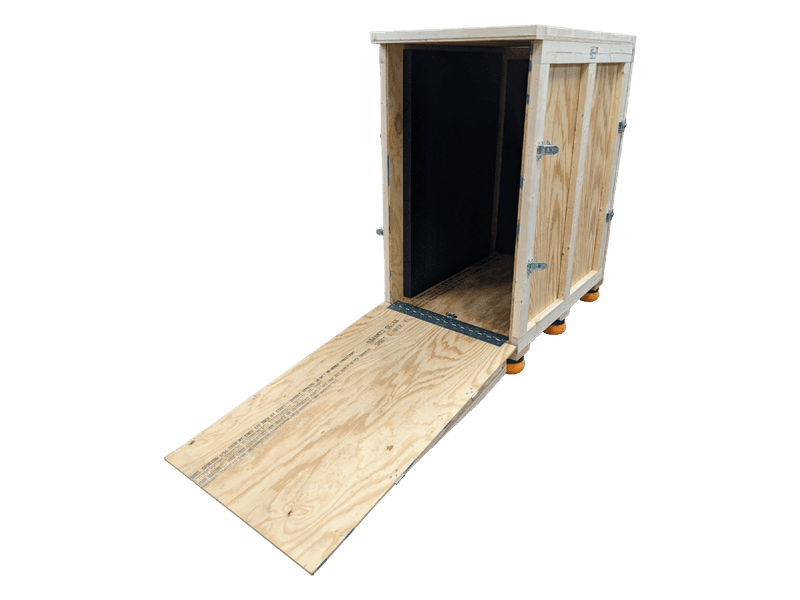
For larger aircraft parts, test fixtures and irregular assemblies, we design the base, supports and enclosure around the load. Removable walls and other openings can make loading and unloading easier.
Explore wood crates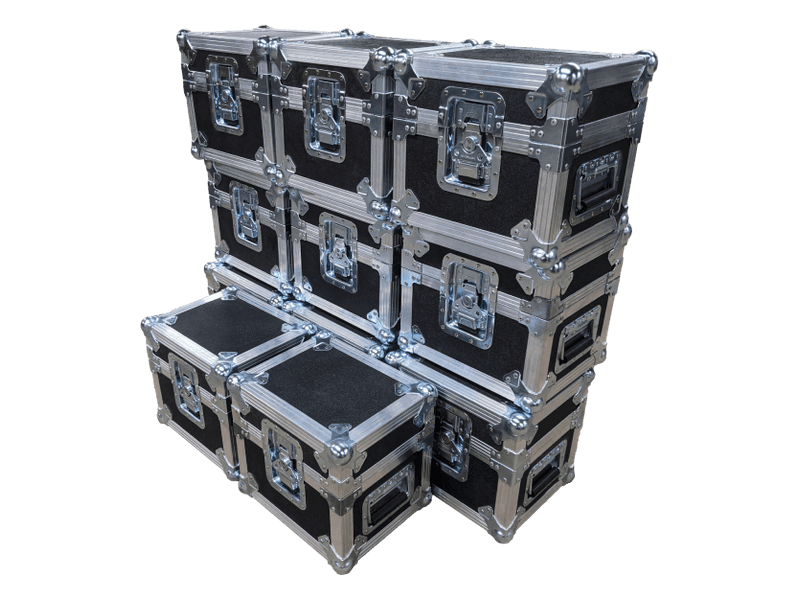
For equipment moving repeatedly between facilities or test sites, we build custom-size cases with fitted interiors. Shelves, trays, removable covers and wheels can help teams access and move the equipment.
Explore ATA casesSensitive components
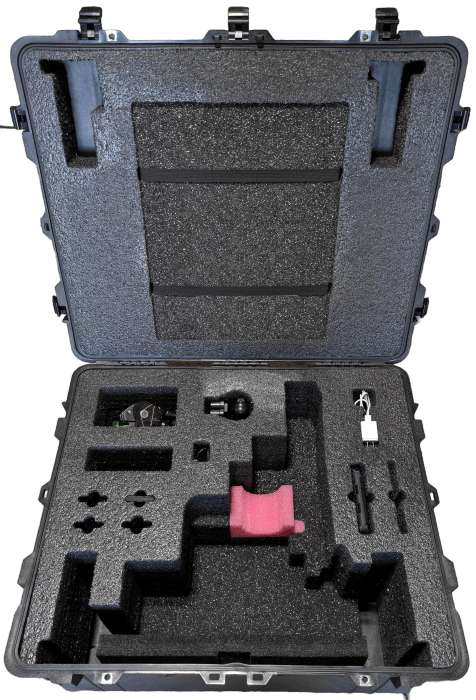
Sensors, avionics and finished aircraft parts can need different support within the same case. The interior must account for where each item can be held and which surfaces or connectors need clearance.
We shape the foam around suitable support areas and leave space around connector pins, optics, controls and finished surfaces. Tell us which areas can take contact and which must remain clear.
We offer polyethylene (PE), polyurethane (PU) and cross-linked polyethylene (XLPE) foam in different densities and colors. CNC routing and CNC waterjet cutting suit different materials and shapes. Anti-static options are available; tell us the electrostatic discharge (ESD) requirements before we select the material.
Finger openings, separate accessory pockets and layered inserts help teams remove equipment and return it to the correct place. We plan lid clearance and access as part of the layout.
Large and irregular equipment
Engine components, large assemblies and test fixtures may need support well beyond a flat crate floor. Their weight, center of gravity and usable support points help determine the base and internal structure.
Cradles, blocking and restraints can support an irregular shape while keeping pressure away from thin panels and protruding parts. Provide the loaded weight and identify the areas intended to carry it.
Removable walls, ramps and forklift access can be included where useful. Tell us how the equipment will enter the crate, which lifting equipment is available and how it will be removed at its destination.
On-site crating can be useful when the equipment or assembled crate is difficult to move. We review the location, working space, access and packing work before arranging a visit.
See how on-site crating works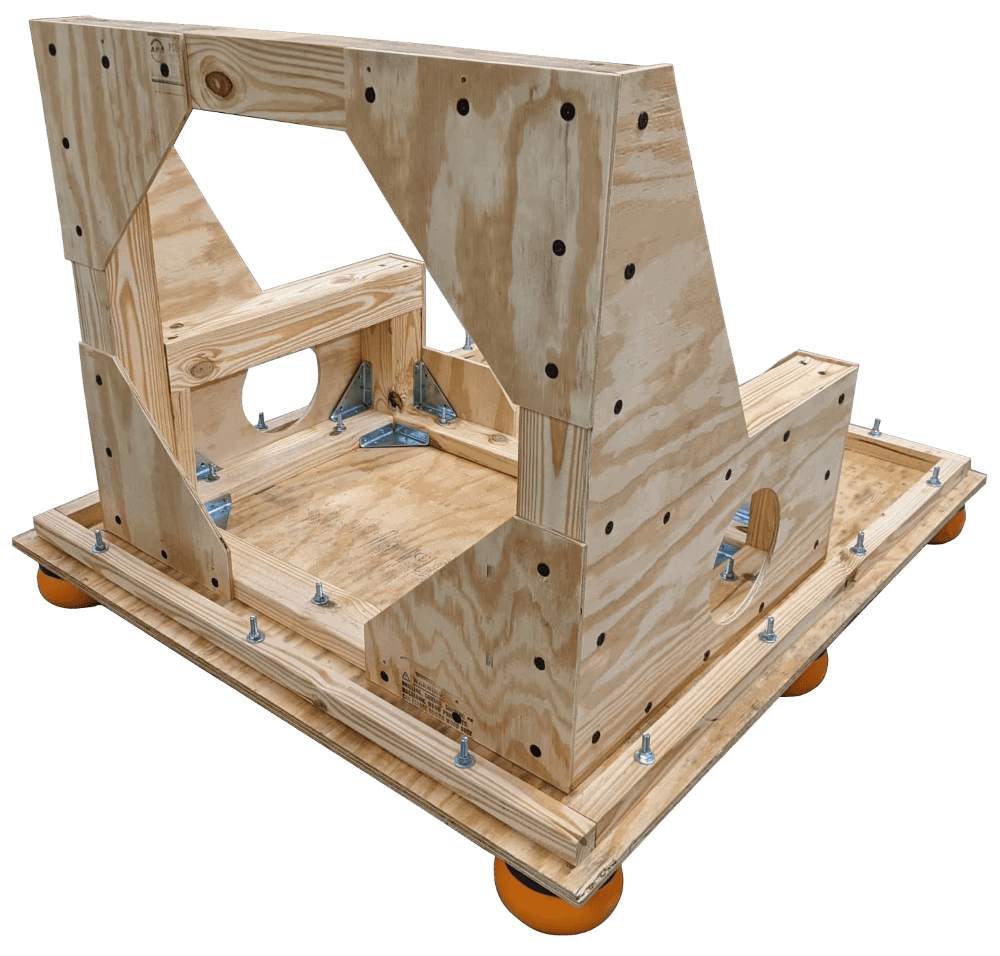
Project examples
Military drone system
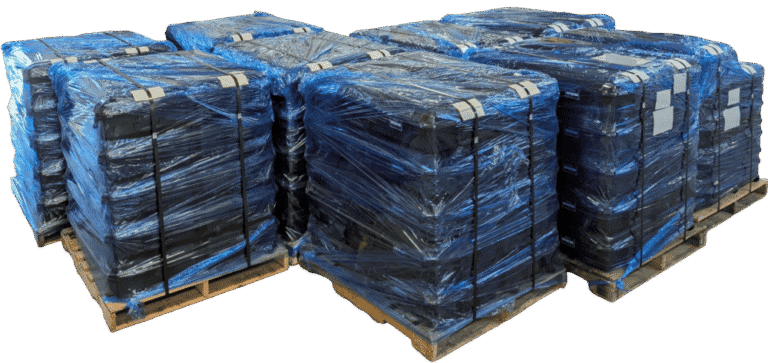
We organized the system in Pelican 1745 Air cases with fitted foam and lid storage. The project involved 41 design revisions as the equipment changed and moved into repeat production.
Read the case study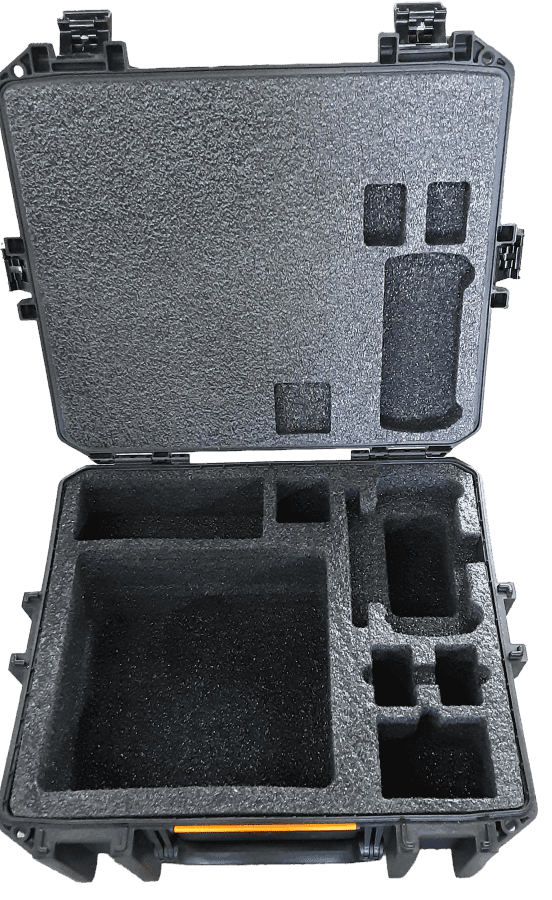
Drone field kits
Atlas and Scout used two Pelican V600 case layouts and a universal foam insert. Twenty revisions and eight physical prototypes helped refine the layouts for regular production.
Read the case study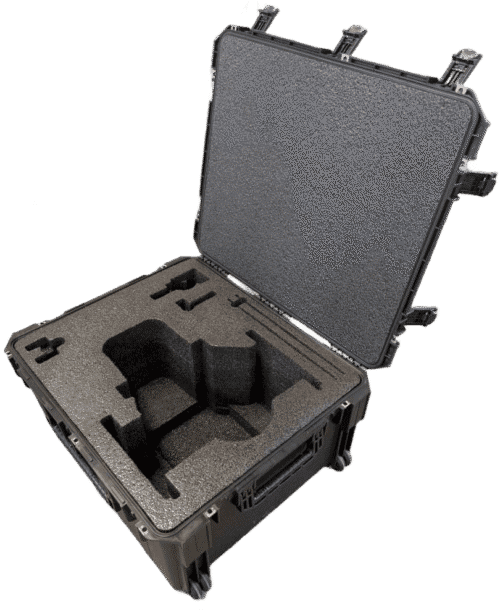
UAV demo and field kit
We reproduced the customer's layout in two SKB 3026-15 cases with custom PE foam. The inserts included finger openings and clearance around sensitive connector pins.
Read the case studySecure information and design
For eligible defense-related aerospace projects, our secure enclave supports controlled unclassified information (CUI), so you can share the technical detail needed for packaging design without scrubbing it first.
Our team creates and revises the 3D packaging designs in-house, so questions and changes go directly to the people developing the case, foam or crate.
We support fast turnarounds for time-sensitive aerospace projects. Share the required date early so we can determine what is practical before confirming delivery.
Contact us to confirm what we can accept and arrange an approved transfer method before sending CUI or export-controlled technical data. Do not include controlled information in this website form or its attachments.
Shipment and storage requirements
Share the destination, transport method, storage conditions and any customer packaging instructions at the start. These details affect material selection, preservation and markings.
Provide any required packaging specifications, cleanliness limits, tests, labels or documentation. We review what the project requires and what we can supply before confirming the work.
Waterproof barrier bagging and desiccant, which absorbs moisture, can be included for sensitive shipments. We determine the approach based on the journey and expected storage period. A wood crate alone is not a sealed moisture barrier.
All wood crates we make are ISPM-15 certified and stamped. This addresses wood treatment and marking, but customer packing specifications, testing and other destination requirements still need separate review.
Common applications
The equipment and how it is used affect the packaging. These guides cover complete kits, sensitive instruments and larger systems.
Flight-test and demonstration kits can include drones, controllers, batteries, payloads and communications equipment. See examples of complete kits arranged for movement between facilities and field locations.
Explore drone, robot and comms kitsAirframes, ground systems and integrated assemblies may be too large for a standard case. This guide covers planning a complete shipment around equipment with unusual dimensions and handling needs.
Explore large transport packagingCalibration tools, sensors and measurement instruments move between laboratories, maintenance areas and test sites. See packaging options for the instrument and the accessories used with it.
Explore precision instrument packagingMaintenance and field-service teams may need matching kits at several locations. Consistent component positions help with handoffs and packing checks across those units.
Explore repeatable technical-kit packagingDesign and ordering
Design assistance and quotes are free, with no requirement to purchase. Our in-house team prepares the packaging layout and works through changes with you.
Start with dimensions, drawings, 3D models or photos, plus the equipment list, weight, quantity and required date. Let us know if the equipment is still changing.
We recommend the case, foam or crate design and provide views for your review. Check component fit, support areas, access and the proposed materials before approving the design.
After any required prototype review and your approval, we build the packaging and arrange delivery. We retain approved designs and revisions for repeat orders or later equipment changes.
Frequently asked questions
Practical details for ordering, repeat use and delivery.
Yes. Send the case brand and model, usable interior dimensions and the equipment list. We can design replacement or new foam inserts around the case and its contents.
Tell us about your project
Tell us about the equipment, quantity, transport or storage needs and required date. We will help choose the packaging and prepare a design and quote.