In-House Design for Custom Cases, Crates, and Foam
Home > Services > In-House Design for Custom Cases, Crates, and Foam
In-House Design for Custom Cases, Foam, and Crates
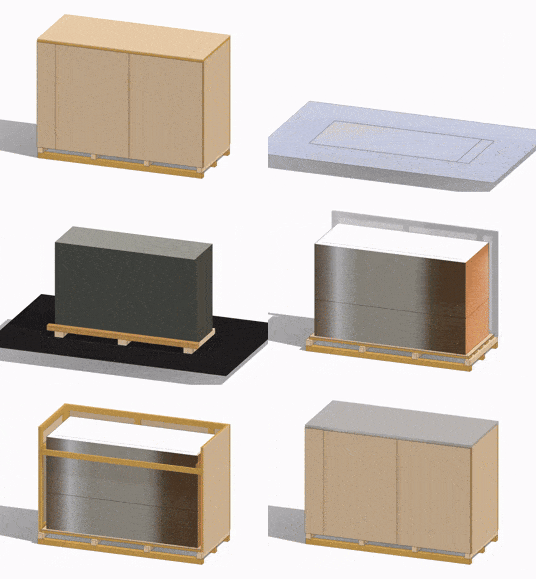
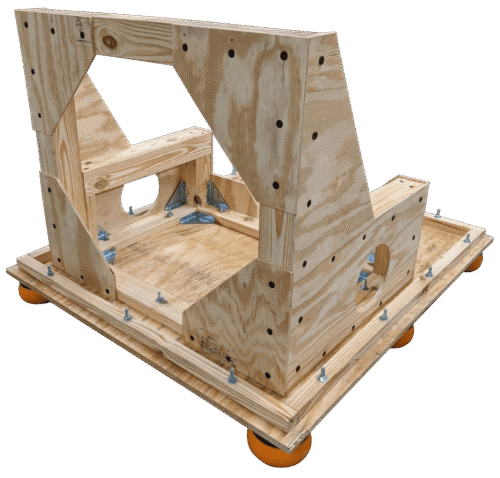
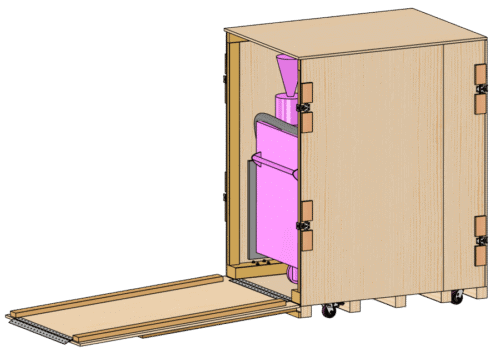
Animation of crating building process with waterproof barrier bag in SolidWorks
Vol Case provides in-house design support for custom protective packaging, including injection molded / hard cases with custom foam, ATA cases, and wood crates. Our team works closely with customers to design durable, cost-effective packaging solutions around the equipment, use case, and shipping conditions involved. Whether you need a portable hard case for a technical field kit, an ATA case for repeated movement between facilities, or a wood crate for oversized machinery, we handle the design work needed to move the project from concept to finished packaging.
Because the design work happens in-house, we are able to move quickly, evaluate trade-offs early, and make changes as the project develops. We work from customer CAD files, drawings, dimensions, and reference photos, and we can develop 2D and 3D models in SolidWorks, Fusion, and Onshape. We can also create rendered examples, exploded views, motion visuals, and other approval materials that help customers review a concept before production begins.
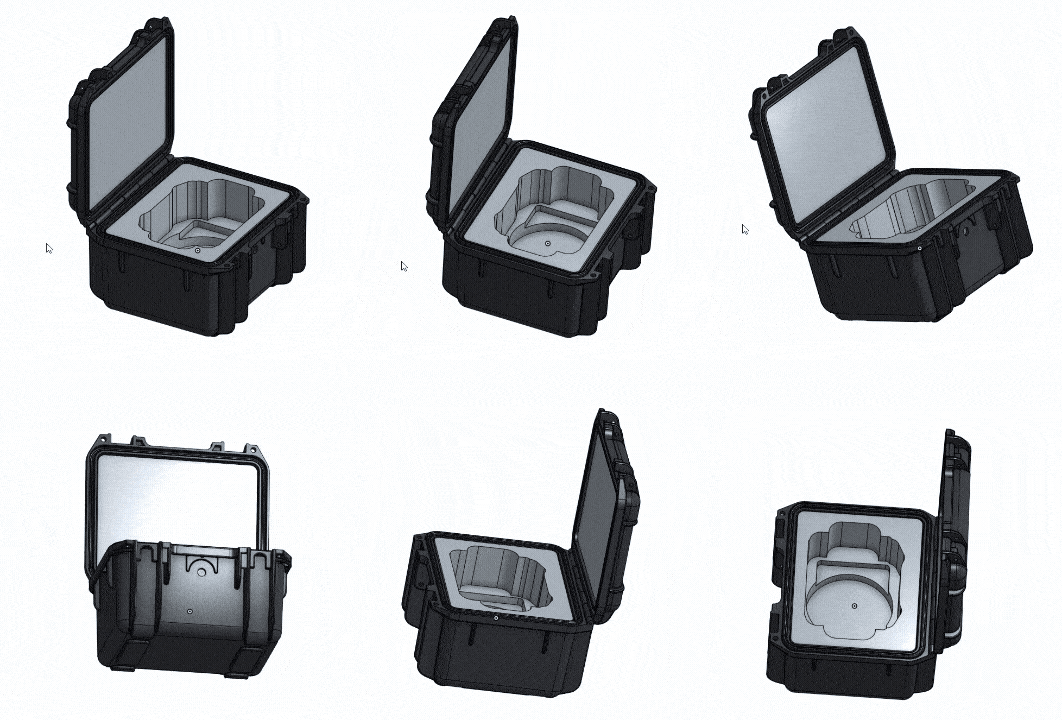
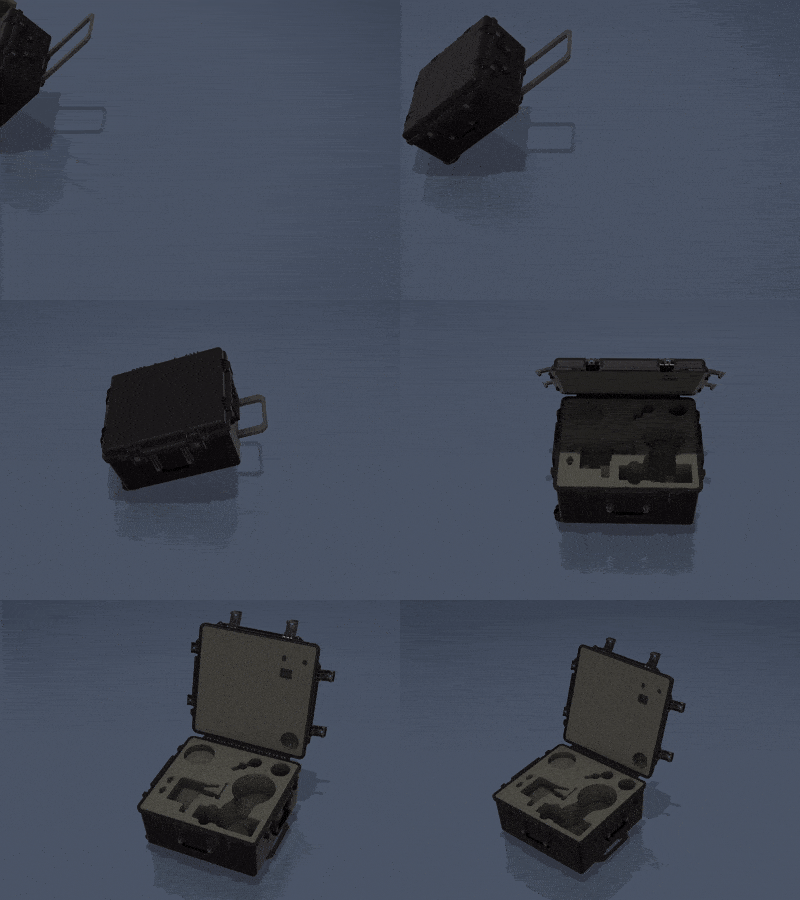
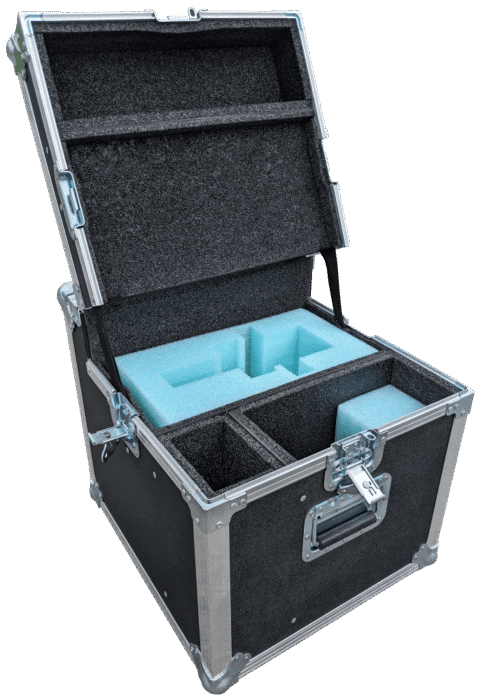
Pelican case with custom foam designed in Onshape
Our design process is built around real-world packaging performance. That means looking beyond outside dimensions and thinking about how the finished case or crate will actually be used. We consider portability, access, repeated handling, shipping method, internal organization, support points, and how the equipment will be packed, unpacked, and moved over time. The goal is not just to make something fit. The goal is to create packaging that protects the equipment, looks professional, and works well in actual use.
For qualifying government-related projects, we can also support confidential technical data within our CUI enclave.
All of our design work and quotes are done completely free, with no requirement to purchase.
What We Design
Custom injection molded / hard cases
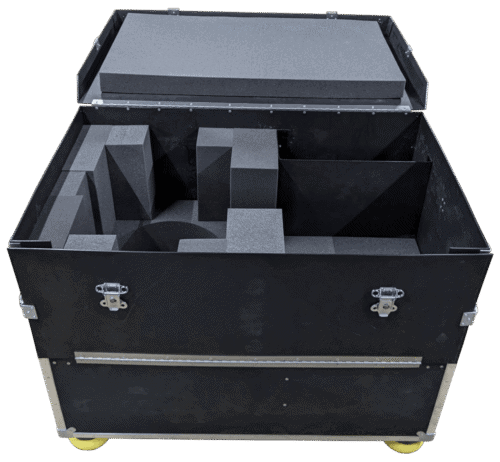
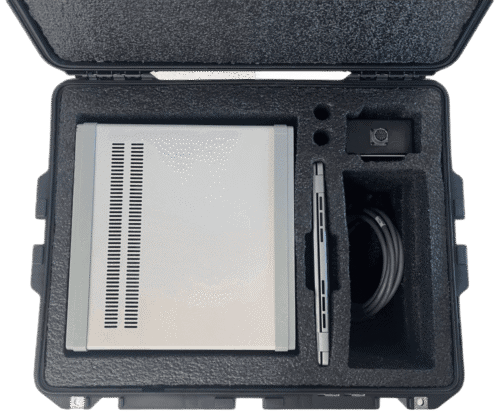
For injection molded cases, the design work usually focuses on custom foam interiors, fixed component locations, lid and base organization, frequent equipment access, and portable protected transport. These projects are often used for technical field kits, customer demos, portable instruments, electronics, sensors, military pack-outs, and other systems that need to stay organized while moving between sites.
A well-designed hard case does more than protect the equipment. It also improves presentation, speeds up setup, and makes it easier to see whether everything is packed correctly. We help determine where each item should sit, how accessories should be grouped, how much padding is needed, and how the foam should be cut so the layout works in real use.
Custom ATA cases
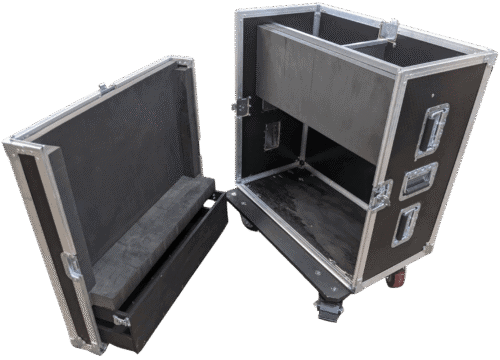
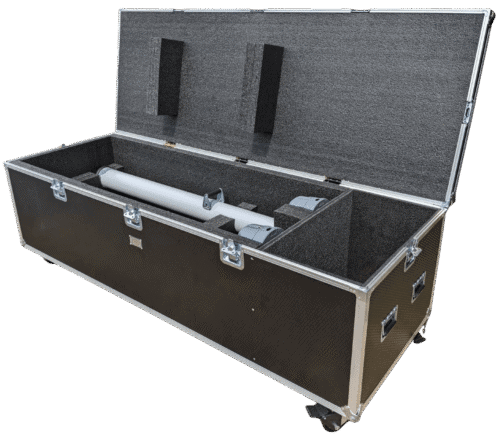
ATA cases are often the right choice when equipment is larger and heavier, but still moved often. These projects may include custom interiors, foam, partitions, drawers, restraints, removable trays, ramps, shelves, and other features that support repeated transport and repeated access.
The design approach for an ATA case is usually different from a small portable hard case. In many cases, the priority is not just compactness. It is also packaging flexibility, ease of loading and unloading, serviceability, efficient truck packing, and how the equipment will be handled over time. Our design team helps develop layouts that support reuse, organization, and efficient movement between warehouses, vehicles, customer sites, and production environments.
Custom wood crates
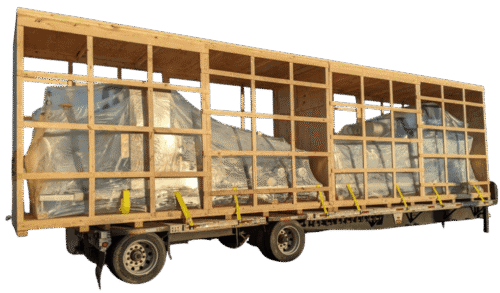
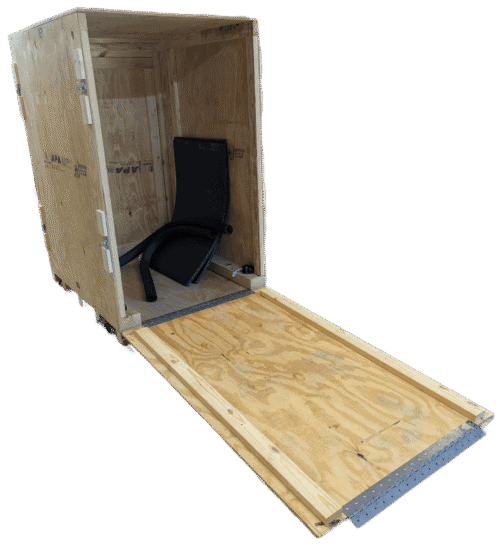
For wood crates, design often centers on support structure, blocking and bracing, restraint, load distribution, and shipping survivability. These projects are commonly used for oversized, heavy, fragile, or unusually shaped equipment that cannot be protected well by generic packaging.
Good crate design starts with understanding the equipment and how the crate will be transported. We look at dimensions, weight, support points, sensitive areas, lift considerations, and transport conditions. From there, we develop a crate concept that is built around the equipment and how you will move it. Depending on the project, that can include foam, custom saddles, braces, skids, cushioning, interior compartments, or other structural features needed to keep the shipment secure. Most crates are single use, however, we can design them to be multi use when needed.
Custom foam
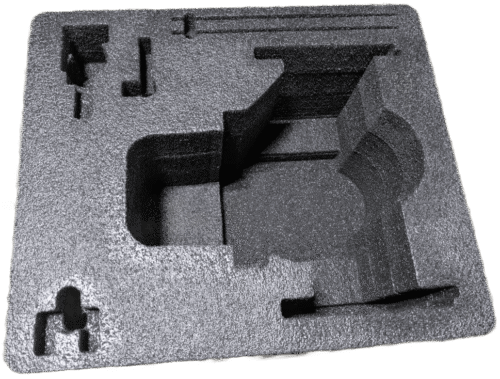
Foam can be a standalone product, but is often combined with one of our other product lines. Foam design focuses on having a tight fit around the equipment to prevent movement during transit, make it clear what equipment goes where, and reduce vibration from damaging sensitive components.
The perfect foam set relies heavily on having accurate and up-to-date measurements on your equipment, understanding delicate components of the equipment, and knowing the real world use of the foam. There are several different types, densities, and colors of foam to match your intended use along with cost and aesthetic needs. Foam is almost always used in our injection molded cases, ATA case, corrugated boxes, and plastic containers along with occasional use in wood crates.
What Our In-House Design Team Provides
Work from customer files
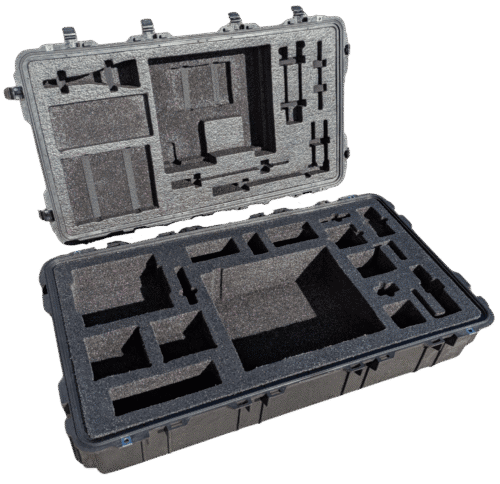
Case and custom foam design rendering
Many projects start with customer-supplied information. That may include 3D CAD models, 2D drawings, dimensions, assembly files, photos, or a physical part. When detailed files are available, we can build the packaging layout around the real geometry of the equipment. When they are not, we can still work from the information available and help determine a practical solution.
This flexibility is important because not every customer is at the same stage. Some have full engineering files ready to go. Others are still refining a prototype and need help shaping the packaging around a changing design.
Develop 2D and 3D packaging layouts
We create layouts for foam inserts, case interiors, trays, compartments, crate supports, and complete pack-out systems. In some projects, the main challenge is organizing a large number of components cleanly in a compact footprint. In others, it is building the right support structure around a heavy or delicate assembly. Our design work is meant to solve those practical packaging problems early, before material is cut or assembly begins.
For hard cases, that might mean pocket geometry, lid storage, layered foam, or accessory organization. For ATA cases, it may involve drawers, dividers, mounting locations, or custom interior structures. For wood crates, it may involve blocking, bracing, support structures, vibration reduction, waterproof bagging, and safe restraint of the equipment during transit.
Create rendered examples and review materials
Before production starts, many customers want to see what the finished concept will look like. We can provide rendered examples, finite element analysis (FEA), approval views, exploded views, layer views, and other visuals that make the design easier to review. This helps reduce ambiguity and makes it easier to confirm fit, layout, and general usability before the packaging is built.
For projects with multiple components, review visuals are especially helpful. They show how the equipment will be organized, how the finished pack-out will present when opened, and whether the layout supports the way the system is actually used.
Support evolving prototypes
Many technical projects do not stay fixed for long. A prototype may gain a new cable set, a power component may change, or a customer may want to reorganize the layout after seeing an approval rendering. Because the design work is handled in-house, we can adapt to those changes more easily and keep the project moving.
This responsiveness is often one of the biggest advantages of a custom design process. Instead of trying to force a new revision into an old template, we can update the design around the current version of the equipment and keep the packaging aligned with the actual program.
Perform design analysis where needed
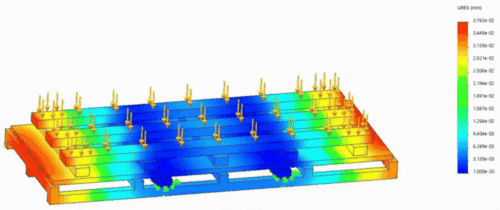
FEA load displacement in SolidWorks
Some projects benefit from additional review beyond simple fit and placement. When appropriate, we can support FEA, clearance review, motion visualization, and other design checks that help validate the concept. Not every project needs this level of detail, but when it adds value, it can help identify issues earlier and improve confidence before production. FEA is especially helpful when packaging items over 30,000 lbs.
Military and government compliant packaging knowledge
If you’re selling equipment to the military, you are likely familiar with their rules and process around your product. Packaging for those products has several requirements as well. Our team has extensive experience designing military compliant packaging, including the testing and marking / labeling process.
Save approved designs for future builds
One of the main advantages of designing in-house is repeatability. Once a layout is approved, the design can be saved and carried forward into future builds. That supports consistency across multiple units, easier reorders, and a smoother transition from urgent prototype work to repeatable production packaging. We also keep all revisions organized and on file.
Design Tools We Use
Our team works in SolidWorks, Fusion, and Onshape for 2D and 3D packaging design. These tools allow us to build layouts around customer files, create visual approval materials, and refine concepts efficiently as the project develops.
The software matters, but the bigger value is how it is used. Good packaging design is not just about modeling a shape. It is about understanding the equipment, the transport conditions, and the trade-offs involved in protection, access, organization, and cost.
Why In-House Design Matters
Faster turnaround
When design, quoting, and production planning are closely connected, projects move faster. That is especially important for prototypes, customer demos, and urgent shipments where delays in layout decisions can slow everything down. In-house design helps us make decisions quickly, answer questions earlier, and reduce unnecessary back-and-forth.
Better fit and protection
Protective packaging works best when it is designed around the actual equipment. Good design helps reduce internal movement, support delicate areas, maintain proper clearances, and create more controlled contact points. Whether the solution is foam in a hard case, a reusable ATA interior, or a crate with blocking and bracing, the design work is what makes the protection strategy practical.
Better organization and presentation
A good layout makes equipment easier to pack, unpack, inspect, and use. For many customers, appearance matters too. A clean, well-organized pack-out creates a more professional presentation for demos, field use, internal reviews, and customer-facing situations. Design is what turns a pile of parts into a usable system.
Better repeatability
When a project starts with one urgent unit and later grows into more, a saved design helps keep future builds consistent. Pocket locations, compartments, support features, and overall layout logic can be carried forward instead of reinvented from scratch. That makes it easier to maintain consistency across units as a program expands.
Better transport planning
Different equipment needs different types of packaging. Some systems are best protected in a compact hard case with custom foam. Others need a reusable ATA case. Others require a wood crate designed around size, weight, and shipment conditions. In-house design helps determine the right solution early so the packaging matches the real transport and handling needs.
From Concept to Finished Packaging
1. Obtain equipment size and geometry
We start by obtaining the external size and geometry of your equipment and the quantity of each part. This can be done through accessing 3D models, 2D drawings, or simply measuring the equipment. This gives us a rough idea of what kind and size packaging will be a potential fit.
2. Review the equipment and use conditions
For each piece of equipment, we explore how it will move and what kind of protection is required. That may include weight, fragility, surface sensitivity, accessories, shipment method, portability requirements, and how often the packaging will be opened and reused.
3. Choose the right packaging format
Based on the equipment and use case, we help determine whether the best solution is a hard case, an ATA case, a wood crate, or a broader custom packaging system. The right answer depends on more than just dimensions. It also depends on transport conditions, handling, presentation goals, and long-term reuse.
4. Build the design
Once the packaging approach is selected, we develop the layout. This may include foam pockets, tray concepts, interior structures, support features, crate bracing, or other packaging details needed for fit, protection, and usability.
5. Share approval views
When needed, we provide rendered examples, exploded views, FEA strength analysis, or other review materials so the customer can see the proposed concept before production begins. This step helps catch issues early and gives customers more confidence in the final layout.
6. Produce and verify
After approval, the project moves into production. Foam is cut, cases are assembled, and crates are built according to the approved design. The finished packaging is then reviewed for fit, access, and practical use.
7. Repeat the layout when needed
If the project expands into more units later, the saved design can be reused and adjusted as needed. That helps maintain consistency and makes future builds easier to manage.
Designed for Technical and Sensitive Equipment
Many of the projects we support involve technical equipment that cannot be treated like a generic commercial product. That can include electronics, sensors, instruments, test equipment, aerospace components, medical devices, research hardware, industrial systems, government-related equipment, and machinery weighing up to 100,000 lbs.
These types of projects often involve delicate connectors, unusual geometry, multiple accessories, critical surfaces, or strict organization requirements. The packaging has to do more than survive shipping. It has to keep the equipment organized, protect it during repeated handling, and make the system easier to use in the field, in a lab, on a production floor, or in front of a customer.
For qualifying projects, we can also work with confidential government data through our CUI enclave. That allows us to support sensitive technical packaging projects while maintaining the right handling environment for protected information.
Prototype to Repeatability
3D rendering in SolidWorks for client review
A large percentage of custom packaging work starts with a first unit. Sometimes that unit is needed quickly for a demo, test, validation event, or shipment. Later, the same program may need more units built the same way.
That is one of the biggest reasons in-house design matters. When the layout is developed carefully at the beginning, it becomes much easier to repeat it later. The first project is not just a one-off solution. It becomes the starting point for a repeatable packaging standard that can be used again as the program matures.
Frequently Asked Questions
Can you work from our CAD files?
Yes. We can work from customer CAD files, drawings, dimensions, and other technical inputs to develop the packaging layout.
Do you provide design support for all your product lines?
Yes. Our in-house design capability supports hard cases / injection molded cases, ATA cases, wood crates, foam, boxes, and other custom protective packaging solutions.
Can you help if our design is still changing?
Yes. Many prototype and technical projects evolve during development. We can update the packaging design as the equipment changes. Keeping the design process in-house allows us to quickly update packaging based on your product development.
Do you provide renderings before production?
Yes. When helpful, we can provide rendered examples, approval views, exploded views, and other visuals so you can review the concept before production begins. Your design reviews will include a link to the product where you can rotate, measure, and cross section the packaging to ensure it meets your expectations.
Can the same layout be repeated for multiple units?
Yes. Approved designs can be saved and used again for future units, helping maintain consistency across repeat orders. We have many examples of scaling from one prototype to hundreds of repeat products.
Can you support confidential government-related projects?
For qualifying projects, yes. We can work with confidential technical information within our CUI enclave.
Conclusion
Good packaging starts with good design. Whether you need a custom hard case with foam, a reusable ATA case, or a wood crate built around oversized equipment, Vol Case provides in-house design support to help develop the right solution from the start.
If you have equipment that needs custom protective packaging, send us your files, dimensions, or equipment list. We can help determine the best format, develop the layout, and move the project toward a finished case, crate, or pack-out system that protects the equipment and works in real use.
About Vol Case
Volunteer Case & Container is the oldest custom crate and case manufacturer in the East TN area. Founded over 30 years ago, all of our protective packaging solutions are still designed and assembled at our facility in Oak Ridge, TN. We specialize in custom wood crates, ATA cases, wood or plastic containers, injection molded cases, and waterjet or CNC cut foam inserts. Our customers span a variety of industries including nuclear, government, aerospace, military, medical, R&D, and more. Our team has experience designing and building everything from huge wood crating for 70,000+ lbs machinery to small injection molded cases for key-sized objects. Whatever your needs, our team works on quick turnaround times to provide you with high quality protective packaging. Contact us today for a free quote.
Whether you need one wood crate or hundreds of ATA cases, we’d love the chance to earn your business. All of our designs and quotes are done for free without any purchase required. We are able to work off dimensions/CAD files that you provide to us or we can visit your facility to take measurements of the equipment.
“I ordered several different products from Volunteer Case & Container, from export crates in many different sizes to foam to line the crates with. The workmanship of the crates is superb. They always get them to me in a timely manner even when I need it the next day. The prices are hard to beat. Great people to work with!”
- Elisa S.
A Great Partner You Can Always Count On
I’m a Buyer / Planner for a high tech manufacturer in Oak Ridge, TN. I’ve been acquainted with Volunteer Case since they have been in business, through their association with doing business with my company. The last six years I’ve been a Buyer and worked very closely with Volunteer Case. Their shipping containers are exceptional, they always go above and beyond expectations to make a quality product. As a Buyer many times we ask for tough deliveries, Volunteer Case always come through despite some tough due dates to help us get product shipped to our customers. I would highly recommend Volunteer Case to anyone, they have been a great partner who you can always count on.
- Larry B.
Always Good to Deal With.
Volunteer Case has done many crates for us over the years. We have always been pleased with their work. I have used them for years and plan on using them many years in the future.
They are always good to deal with.
- Bryan L.
Highly Recommended for Sensitive Equipment Needs.
My company has a frequent need for IPPC stamped crates that are able to ship very delicate and expensive equipment overseas. In the past, we tried other crating companies with not much success, until we found Volunteer Case and Container LLC. They listened to our needs and design crates for each individual shipment. Since starting to use their crates we have had no damaged equipment. I would highly recommend them for anyone’s crating needs.
- Dana H.
Great Customer Service and a Quality Product.
Great customer service, quality product. Volunteer Case & Container always goes the extra mile to get me what I need, when I need it.
- Shawn H.
Quality Custom Work with Great Service.
Since 2011, as a defense contractor, we have purchased custom mil-spec cases and shipping containers from Volunteer Case & Container. We are thankful to have such a dependable supplier that is easy to work with, cares about quality, and always willing to ensure that we are fully satisfied with the products we purchase. I would happily recommend Vol Case to anyone with case and container needs, especially if you have custom work that must meet specific specifications.