
Article
ATA Case vs. Trunk Case
The key aspect that will determine whether you need an ATA or trunk case is going to be the type of object and its sensitivity to impact. Let’s dive into the key differences between to two:
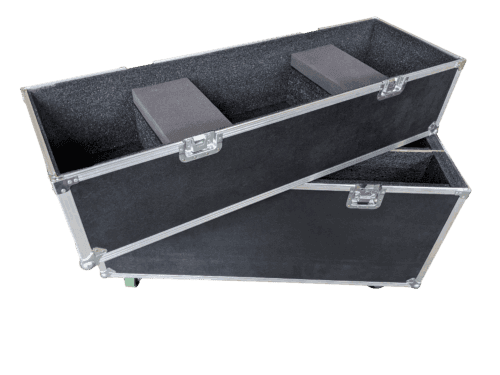
ATA cases
When it comes to transporting equipment, whether it is camera systems, audio equipment, cables, monitors, or other sensitive devices, it is crucial to have a reliable and durable case to protect your gear. Two popular types of cases for this purpose are ATA (Air Transportation Association) cases and trunk cases. While both are designed to protect equipment during transport, they have distinct differences in design, function, and intended usage.
ATA cases are specifically designed to meet the standards set by the Air Transportation Association for air travel. These standards include requirements for recessed hardware, reinforced corners, and the ability to survive the rigors of being checked as baggage on an airplane. The ATA standards also require the case to be able to withstand certain environmental conditions such as extreme temperatures and high altitudes.
Most ATA cases can include custom:
- Trays
- Shelves
- Handles
- Removable sides
- Waterjet cut foam
This makes ATA cases the ideal choice for transporting fragile equipment such as cameras, audio equipment, musical instruments, and other sensitive, form fitting equipment.
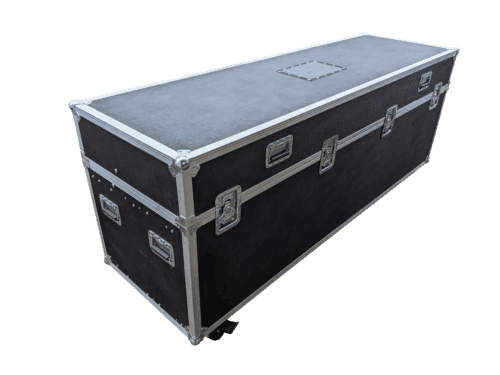
What do ATA cases feature?
One of the key features of ATA cases is their recessed hardware and rounded corners. This means that all of the latches, hinges, and other hardware are flush with the surface of the case, rather than protruding out. In addition, the rounded corners allow the case to easily bounce off other objects. These design features help to prevent damage to the hardware during transport and makes the case less likely to get caught on other objects.
ATA cases come in a variety of sizes and materials, including plastic, Zyply, and ABS. Each material has its own benefits, such as plastic being more weather resistant and ABS being the most affordable. Additionally, many ATA cases come with wheels and extendable handles for easy transport.
If you are ordering several ATA cases to load into a truck, it is recommended that you have the cases built to a custom size so they fit tightly in the back of a box truck. You want to minimize the amount the cases can roll around and impact each other during transportation.
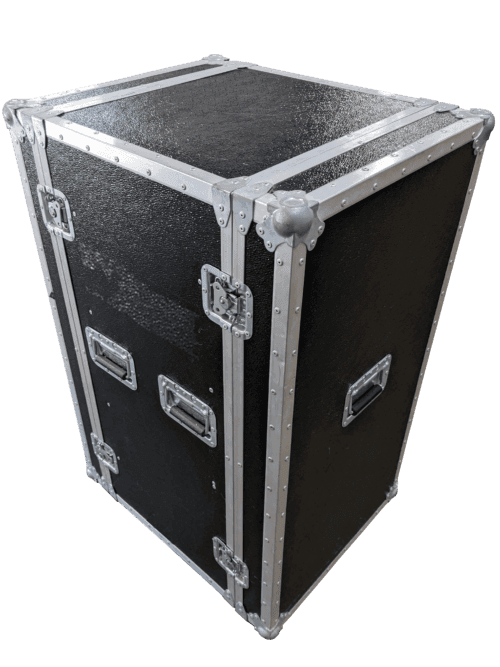
Trunk cases
On the other hand, trunk cases are designed for ground transportation as they are typically heavier than their ATA case counterparts. They are typically used to transport equipment that is not as delicate and form-specific, such as tools, cables, and miscellaneous parts. Trunk cases are usually more durable and are built to withstand more rough handling than ATA cases.
Trunk cases are typically made out of ¾” birch plywood and then include a protective outer layer. The two most common outer layers are fiberglass and gelcoat paint or truck bed liner. Personally, we recommend the truck bed liner as it tends to be cheaper, stronger, and more durable.
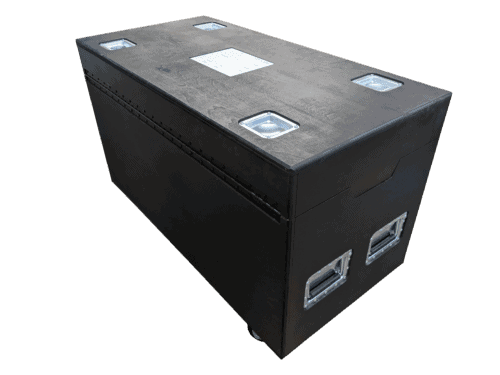
Most trunk cases can include custom:
- Handles
- Partitions / dividers
- Recessed hardware
- Whiteboard-style labels
- Castor cups for stacking cases
The edges and corners of a trunk case are rounded, but not as significantly as with an ATA case, meaning it doesn’t bounce off other objects as well. Depending on your needs, the hardware can be recessed or external to the case as well.
Similar to an ATA case, we recommended that you build trunk cases to a custom size so they fit tightly in the back of a box truck. This will minimize shifting and impact during transportation which will better protect your equipment and prolong the lifespan of your cases.
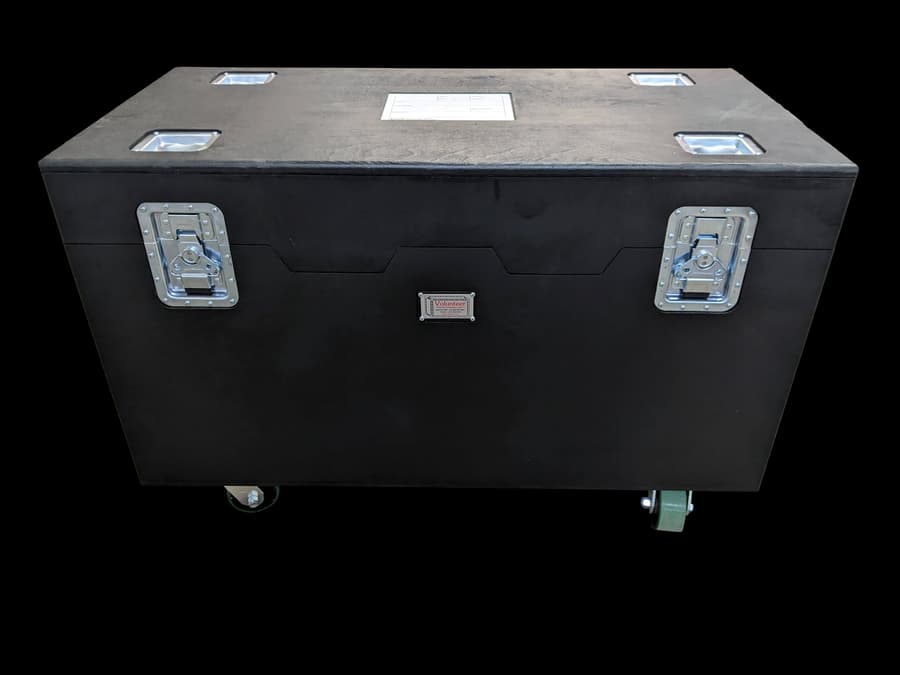
In conclusion, your specific needs will determine which case style is best for you. Below is the list of reasons to choose one case style over another:
ATA Case:
- Transporting sensitive, form fitting objects that would be best to have surrounded by foam like cameras, monitors, and audio devices.
- Potentially traveling by air, so the weight of the case should be minimized.
- Need customizations like individual trays, shelves, and removable sides.
Trunk Case:
- Transporting bulky, durable, and non-form fitting objects like cables, wires, lights, and miscellaneous equipment.
- Traveling solely by ground transportation, so weight is not a major concern.
About Vol Case
Volunteer Case & Container is the oldest custom crate and case manufacturer in the East TN area. Founded over 30 years ago, all of our protective packaging solutions are still designed and assembled at our facility in Oak Ridge, TN. We specialize in custom wood crates, ATA cases, wood or plastic containers, injection molded cases, and waterjet or CNC cut foam inserts. Our customers span a variety of industries including nuclear, government, aerospace, military, medical, R&D, and more.
Our team has experience designing and building everything from huge wood crating for 70,000+ lbs machinery to small injection molded cases for key-sized objects. Whatever your needs, our team works on quick turnaround times to provide you with high quality protective packaging. Contact us today for a free quote.
Tell us about your project
What do you
need to protect?
Tell us what you need to pack, how it will travel and when you need it. We can help you choose a case, foam insert or wood crate.
- Free design and quoting
- Direct access to our team
- No obligation to purchase