
Protective Packaging for Precision Instruments
Custom Cases for Precision Instruments

Precision instruments need more than generic cushioning. When equipment is alignment-sensitive, even small amounts of uncontrolled movement can create handling damage, vibration exposure, or loss of calibration during shipment or repeated transport.
Vol Case designs precision instrument packaging for sensitive instruments, sensors, optics, imaging systems, test equipment, monitoring devices, and other high-value assemblies that need tight protection. Our solutions are built to provide controlled support and retention, reduce movement, protect against shock and vibration, and create clean, organized pack-outs that are easy to inspect and repack the same way every time.
Depending on the size, weight, and transport cycle of the equipment, that solution may be a custom hard case with foam for precision equipment, a reusable transit case, or a larger shipping crate with engineered interior support. In every case, the goal is the same: protect alignment-sensitive equipment from rough handling, repeated transportation, and shipping damage while keeping the layout consistent and professional.
Best Fit For

We design organized protective packaging for precision instruments that may include:
-
Precision instruments and measurement devices
- Sensors, probes, and monitoring equipment
-
Optics, lenses, imaging systems, and camera assemblies
- Calibration tools, reference standards, and test fixtures
-
Data acquisition modules and sensitive electronics
-
Cables, test leads, adapters, and power supplies
- Mounts, brackets, stands, and alignment accessories
-
Delicate connectors, knobs, displays, and exposed control surfaces
- Service tools, spare components, and field-replacement items
-
Multi-component instrument kits that need the same layout repeated across units
Many packaging solutions combine mixed component types in one case: fragile electronics, protruding accessories, cables, and small parts. Custom foam, unique inserts, and compartment layouts make it possible to keep each item secure, visible, and easy to access.
Example Applications
Unfortunately, there are several products we aren’t allowed to display due to the confidential military nature of them. However, here are some recent projects that we are able to highlight:
Nuclear Analysis and Measurement Device Transport Case

Challenge:
The customer specializes in testing, maintenance, and monitoring of nuclear power plant equipment such as rod control systems, I&C sensors, and motors / generators. This required the customer to frequently transport sensitive testing and maintenance instruments between field and lab sites. All equipment needed protective packaging designed to reduce unwanted movement, support sensitive components correctly, and lower the risk of handling damage or loss of calibration during repeated transport.
Solution:
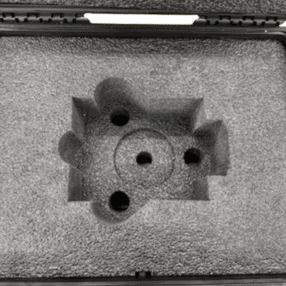
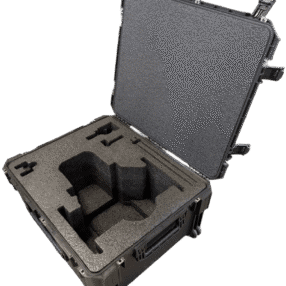
Vol Case designed five different case styles to match the variety of component groups that were needed in the field. The case styles varied greatly between use cases and equipment types. One particularly sensitive diagnostic machine was large and heavy so this was isolated in its own case with several inches of soft PU foam around all sides. On the other end of the spectrum, there were several precision measurement instruments that were smaller and more robust. Therefore, we used a medium density cross-linked PE foam with 14 components intuitively laid out in one case. This multi-component case is the one shown in the picture to the right.
Case and Foam Packaging for Industrial Camera System

Challenge:
RDI is a national producer of proprietary camera systems and needed custom packaging to ship their product around the world to customers without damaging the internal components and scratching the lenses, while keeping the layout organized and intuitive. Each case needed to house multiple cameras, cables, and accessories and allow for easy packing and unpacking for end customer use.
Solution:
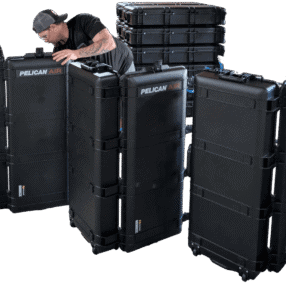
Soft waterjet-cut PU foam was selected as it provided the most shock absorption and was the least likely to scratch any equipment. Each key component was given it’s own dedicated pocket along with an accessories pocket. All foam pockets also included finger slots to make inserting and removing the equipment easy. Extra plugs are included with each set in case a customer doesn’t need every open slot in the case. This project is still ongoing after several years and there have been no reports of damage. Read more on Pelican’s website here.
LiDAR and Accessories Case for Repeated Shipping

Challenge:
A start-up company specializing in portable LiDAR systems needed a way to transport their equipment to customers around the USA. The equipment was rented by customers meaning it would be repackaged and reshipped multiple times. The LiDAR and additional cameras also had strict sensitivity and electro-static requirements.
Solution:
This unit was going to be shipped repeatedly, therefore keeping a small footprint was important so the Pelican 1690 platform was selected. The main piece of equipment going in the case had sensitive components at the top, whereas the bottom was fairly durable. Since the case was a tight fit, we decided to have no foam along the bottom of the unit to maximize the foam around the sensitive sections. Pink anti-static foam was used around the LiDAR and cut in a 3D cradle shape to perfectly fit the equipment. Accessories were strategically placed in the dead space around the main unit. A final large accessory could not fit in the base of the case, so Vol Case decided to use elastic straps to secure it to the lid.
Additional Case Studies
Below are additional case studies which dive into the full product life cycle like customer needs, design, prototyping, and final product. Most products include confidential military / customer details so they have been redacted and anonymized. The information and images included in this case studies are presented in a way that preserves the accuracy of the packaging solution while protecting sensitive aspects of the underlying equipment.

What Precision Equipment Needs From Packaging
Precision equipment is not just fragile. It is often sensitive to how and where it is supported.
Movement control
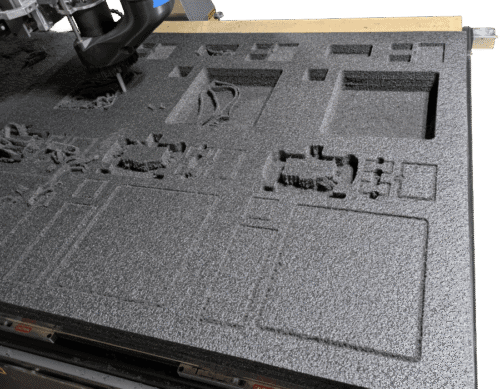
A precision instrument should not be free to rattle, slide, rotate, or bounce inside the package. Effective protective packaging creates a tight, stable fit with minimal unwanted movement during normal handling, loading, unloading, and transport. Because our foam is cut from digital files on CNC router and waterjet equipment, we can produce precise, repeatable layouts across multiple cases.
Alignment protection
For alignment-sensitive equipment, packaging should help reduce the risk of losing alignment or calibration by supporting the right areas of the instrument and avoiding unnecessary pressure on delicate features, optics, connector pins, sensor heads, knobs, brackets, or measurement surfaces.
Shock and vibration reduction
Repeated transport can expose equipment to cumulative vibration, bumps, and small impacts long before a major drop ever happens. Precision instrument packaging should help isolate the equipment from those forces and reduce how much energy reaches the instrument itself. We offer a variety of foam types and densities so we can best match the foam type to the equipment and requirements.
Handling protection
The package should help protect the instrument from real-world handling risks such as rough freight movement, repeated loading and unloading, bench-side packing, dropped cases, and accidental bumps during normal use.
Organization
High-value instruments often travel with cables, probes, mounts, power supplies, reference pieces, paperwork, and spare components. A clean, organized layout protects those items, speeds inspection, and makes it obvious when something is missing before the package is closed.
Consistency
When multiple units are involved, consistent packaging from unit to unit reduces variation in how instruments are packed, shipped, received, and deployed.
How We Design the Packaging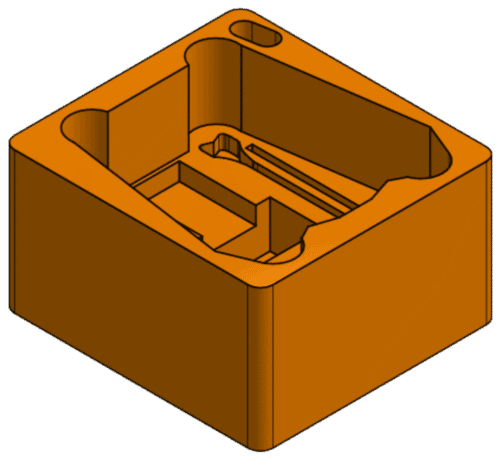
Protective packaging for sensitive instruments starts with three questions:
- Where can the equipment be safely supported?
- Where should it not be loaded?
- How will it actually be shipped, carried, stored, and used?
Our design approach focuses on controlled support, not loose cushioning.
First, we identify stable support zones and no-pressure zones. The safest package is not the one that squeezes every contour. It is the one that supports the right surfaces, avoids stressing delicate features, and limits uncontrolled movement.
Second, we choose the case style and interior materials around the actual application. A portable field instrument may need a custom hard case with foam. A larger or more frequently moved system may need a more durable transit case. A larger shipment may call for a crate or container with engineered internal support.
Third, we design the interior for tight protection with controlled retention. That may include precision-cut foam, layered support, relief areas, partitions, dedicated cavities, finger pulls, labels, and accessory compartments. Tight tolerances matter, but so does correct load path. The goal is a package that secures the equipment without creating harmful pressure points.
Fourth, we design for clean pack-outs. A neat interior is not just cosmetic. It reduces handling mistakes, improves inspection speed, supports inventory control, and creates the professional presentation expected for high-value precision equipment.
Finally, when a program includes multiple units, we design the layout so it can be repeated consistently from one package to the next. That supports repeatable packaging processes, easier training, and more reliable field use.
We have a full design team that can work with any drawings or models you provide. All designs are done in-house so we can rapidly turnaround revisions for your review. We are CMMC Level 2 self assessed, ITAR registered, and familiar with military packaging requirements, so we can work with sensitive, government projects as well.
What We Provide
Hard case selection
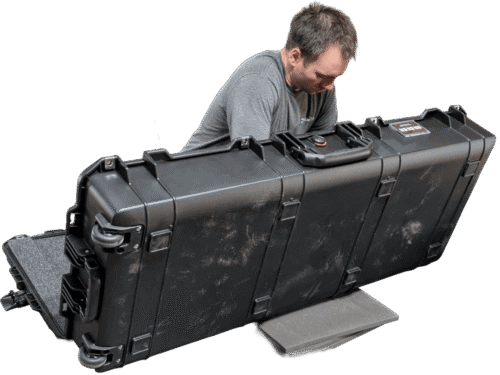
We help select the right rugged case for the equipment, shipment method, and use environment. We offer cases from brands like Pelican, SKB, and Nanuk in both injection molded and rotomolded styles. Case options can also include wheels, telescoping handles, and custom branding depending on your needs.
Custom foam interiors
We create custom foam inserts that hold each component in a secure fixed location. Precision-cut foam helps protect sensitive equipment, reduce internal movement, and keep cables, accessories, and core hardware organized. All our foam is cut with either a CNC router or waterjet.
Component layout planning
We help determine the pack-out layout quickly so the case works in real use, not just on paper. The goal is clean organization, fast inventory checks, easier setup in the field, and a professional appearance when the case is opened in front of a customer. We can also provide labels, crib sheets, plugs, and other tools to help identify where components should and should not be placed.
Quick-turn prototype support
For urgent demo or prototype programs, we support fast turnaround custom case and foam solutions. That includes quick quoting, layout planning, and building a first unit that is ready for protected transport and professional presentation. Recent projects have gone from concept to delivered case in as little as 2–3 days for urgent customer demos.
Repeatable layouts for future units
When a prototype becomes a repeatable product, we can carry the same pack-out forward into additional units. This supports prototype-to-production packaging, consistent presentation across units, and easier scaling as your program grows.
Why Companies Use Vol Case for Precision Instrument Packaging
- Support-zone and no-pressure-zone layout planning
-
Foam material selection based on weight, sensitivity, and transport cycle
-
Experience with cameras, LiDAR, sensors, optics, measurement tools, and diagnostic equipment
- ITAR registered, CMMC Level 2 – self assessed, DFARS & Berry compliance support, and secure CUI handling
-
Extensive experience with defense contractors, aerospace industry, and startups
-
3D cradle shapes and relief pockets for sensitive surfaces or protruding features
- Ability to securely handle sensitive information
-
In-house 3D modeling and design capabilities
- 2-3 day turnaround times when needed
-
Professional appearance and well-organized case design
-
Past performance scaling from prototype to large production runs (100+ units)
- Fully customizable products manufactured with precision cutting machinery allowing for consistency across production runs
-
Products are built for real field use, not just shipping
-
All products are USA made and sourced
-
Customer support that is proactive instead of reactive and same day response times
For Shipment and Repeated Transportation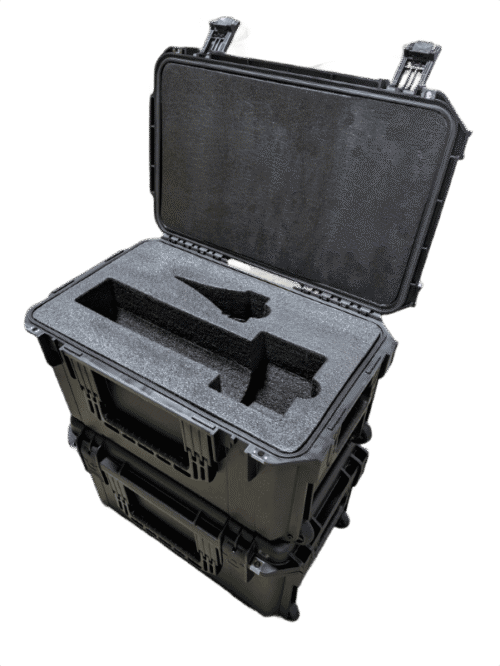
Some instruments ship once. Others move every week between labs, production lines, customer sites, field locations, or service facilities. Precision instrument packaging should be designed around the real use cycle, not just the first shipment.
For shipment protection, the focus is survivability: reducing the risk of damage from freight handling, impacts, vibration, and long-distance transport.
For repeated transportation, the focus is durability and repeatability: packaging that continues to provide tight support after repeated loading and unloading, while making it easy for users to repack the instrument correctly.
Many applications need both. The same package may need to protect the instrument through initial shipment, then continue protecting it during storage, internal moves, field deployment, and re-shipment. That is why we build solutions that address both shipping survivability and repeat transport without losing alignment.
Repeatable Layouts for Multiple Identical Kits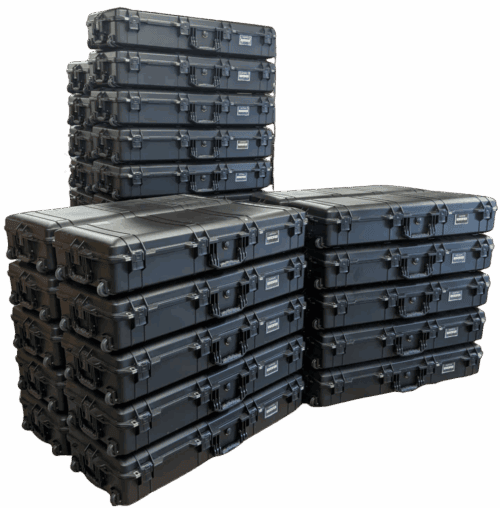
For teams building more than one unit, repeatability matters just as much as protection.
Using our automated machinery, we can create repeatable layouts for multiple identical kits so the sensors, optics, probes, calipers, cables, and spare parts are in the same location in every case. That consistency supports:
- Cleaner QA and inventory control
-
Training and handoff between users
-
Easier replacement or replenishment
- Faster deployment across multiple units
-
Scalability from a prototype pack-out to repeated units
When identical kits open the same way every time, the case becomes part of the workflow instead of a source of confusion.
From Engineering Requirements to Finished Protective Case
1. Review the equipment
We start with the components, dimensions, fragility, and intended use. This may include sensors, sensitive electronics, optics, camera assemblies, test equipment, calibration tools, cables, and accessories. We have full 3D design capabilities, so the best case is if you can provide us with the 3D models of each item.
2. Select the case
We recommend a hard case based on size, portability, durability, and shipment method. We try to pick the smallest case possible to save you money, so the case selection is usually determined by the amount of equipment you have.
3. Plan the layout
We determine where each component should sit for protection, access, and appearance. This step focuses on secure locations, logical grouping, and how the case will actually be packed and unpacked in the field. Depending on the equipment and case selected, we have extensive experience making the most out of a case by making custom trays, using the lid for additional storage, and other creative techniques.
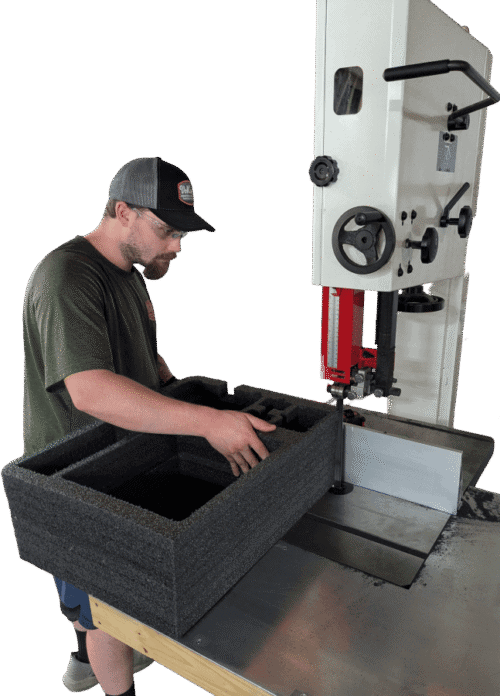
4. Create the foam insert
You are provided with a 3D model of the case and foam for approval. Once approved, we cut the custom foam interior using either a CNC waterjet or router.
5. Assemble and review the finished pack-out
We verify fit, access, and presentation. The goal is a finished pack-out that looks clean, protects the system, and is practical for repeated transport and deployment. If needed, we are able to 3D print mock-components from your models to verify that everything fits nicely in the foam insert. We then ship the case and foam to you for review and use.
6. Repeat the layout when needed
If the prototype moves into additional units, the same pack-out can be repeated for consistency across builds. All of our 3D models, machinery code, and production packets are saved to ensure all products are repeatable. This supports a smoother transition from one urgent prototype to a repeatable product presentation and transport solution.
Frequently Asked Questions
Can you package an alignment-sensitive instrument?
Yes. Alignment-sensitive equipment often needs more than basic cushioning. The packaging has to help control movement, protect vulnerable features, and reduce the risk of shock, vibration, and handling damage that could affect performance.
How do you reduce movement inside the package?
We reduce movement by designing the interior around the actual equipment and its accessories. Precision-cut foam, partitions, relief areas, and dedicated support zones create controlled retention so the instrument stays secure instead of shifting during shipment or repeated transportation.
Are these solutions suitable for repeated transportation?
Yes. Many precision instruments are shipped, stored, unpacked, repacked, and moved again. We design packaging for those repeated-use conditions so the protection remains durable and the layout stays easy to use over time.
Can the same layout be repeated across multiple units?
Yes. When multiple units are involved, the same interior layout can be repeated across the program so every case has the same organization, same support logic, and same pack-out process.
Can you design a hard case with foam for delicate instruments?
Yes. A custom hard case with foam is often a strong solution for portable precision equipment that needs tight protection, controlled movement, shock and vibration protection, and organized storage for accessories.
What kinds of equipment fit this type of packaging?
Precision instruments, sensors, optics, imaging equipment, monitoring systems, gauges, test equipment, calibration tools, and other sensitive equipment that can be affected by movement, impact, vibration, or rough handling are all good candidates.
What information do you need to design a custom kit case?
The most helpful starting point is a component list, approximate dimensions, photos of the equipment, the number of kits needed, and whether the layout needs to repeat across multiple identical units. It also helps to know whether the case will be used mainly for field transport, customer demos, shipping, or all three.
Request a Quote for Custom Precision Instrument Packaging
Need a custom case for a sensitive, complex, or expensive precision instrument? Send us your component list, quantity, and use case, and we can work with you to help your equipment arrive protected, organized, and ready for use.
About Vol Case
Vol Case & Container is the oldest custom crate and case manufacturer in the East TN area. Founded over 30 years ago, all of our protective packaging solutions are still designed and assembled at our facility in Oak Ridge, TN. We specialize in custom wood crates, ATA cases, wood or plastic containers, injection molded cases, and waterjet or CNC cut foam inserts. Our customers span a variety of industries including nuclear, government, aerospace, military, medical, R&D, and more. Our team has experience designing and building everything from huge wood crating for 70,000+ lbs machinery to small injection molded cases for key-sized objects. Whatever your needs, our team works on quick turnaround times to provide you with high quality protective packaging. Contact us today for a free quote.
Contact Us
Whether you need one wood crate or hundreds of injection molded cases, we’d love the chance to earn your business. All of our designs and quotes are done for free without any purchase required. We are able to work off dimensions/CAD files that you provide to us or we can visit your facility to take measurements of the equipment.
(865) 481-3801
sales@volcase.com
328 Warehouse Rd. Oak Ridge, TN 37830