
Article
The Guide to ISPM 15 Pallets: Export Regulations, Stamps, and Compliance
Don’t let a $15 pallet hold up a $50,000 shipment.
The ultimate guide to ISPM 15 pallets: export regulations, stamps, and compliance
When you are exporting goods internationally, the wood packaging you use is just as legally significant as the product itself. If your pallets don’t meet ISPM 15 regulations, your entire shipment can be quarantined, turned away at the port, or destroyed.
At Vol Case, we specialize in heat-treated, export-ready pallets and crates that ensure your cargo moves through customs without a hitch.
What is ISPM 15?
ISPM 15 (International Standards for Phytosanitary Measures No. 15) is a global regulation developed by
the International Plant Protection Convention (IPPC). Its purpose is to prevent the spread of wood-boring pests—like the Asian Longhorned.
Beetle or Emerald Ash Borer—that can hide inside timber and devastate foreign ecosystems.
To be compliant, all solid wood packaging material (WPM) thicker than 6mm must be treated to kill these pests.
The Heat Treatment Standard
While there are chemical options (fumigation), the industry standard is Heat Treatment (HT).
To meet the requirement, the wood must be heated in a specialized kiln until the core temperature reaches a minimum of 56°C (132.8°F) for at least 30 continuous minutes.
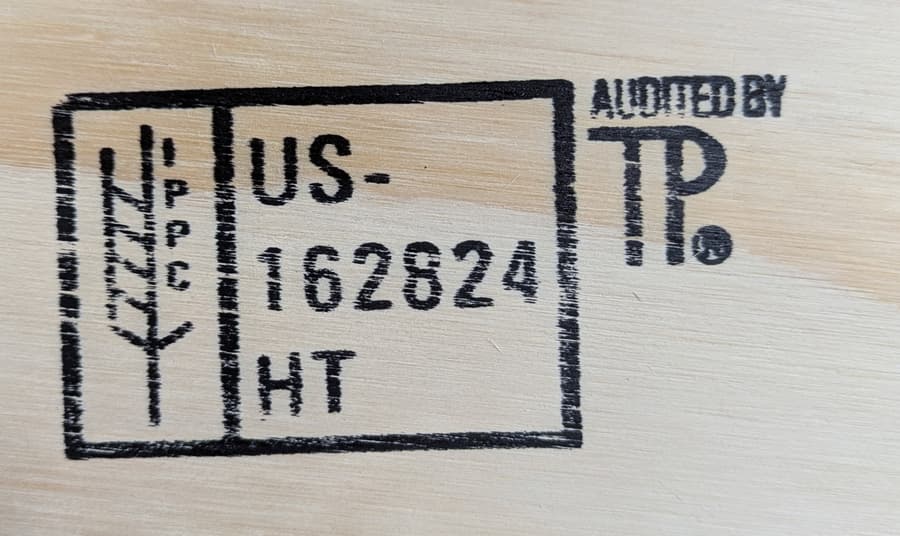
Once this process is verified, the pallet is permanently marked with the official IPPC stamp.
How to read the ISPM 15 stamp
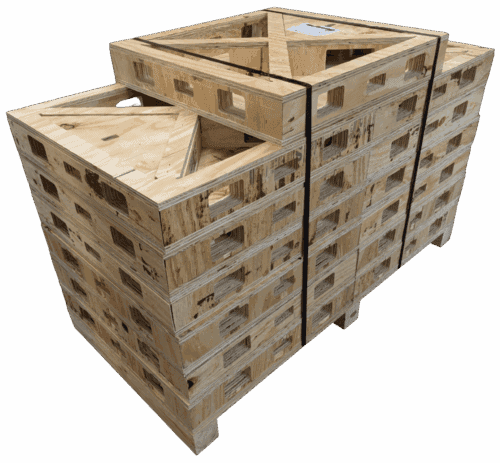
The “Wheat Stamp” is the passport for your pallet. Customs agents look for this mark to verify compliance. If the stamp is missing or illegible, the pallet is considered non-compliant.
Breaking down the code:
-
The Symbol: The wheat/ear graphics is the official IPPC logo.
-
XX (Country Code): The two-letter ISO country abbreviation (e.g., US for United States).
-
000 (Producer Code): A unique number assigned to the specific manufacturer or treatment facility. This creates a chain of custody.
-
YY (Treatment Code): This indicates how the wood was treated.
- HT: Heat Treated (The most common and preferred method).
- MB: Methyl Bromide (A chemical fumigation method, less common due to environmental toxicity).
Exempt materials
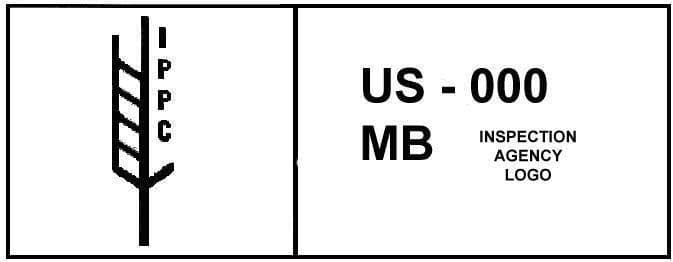
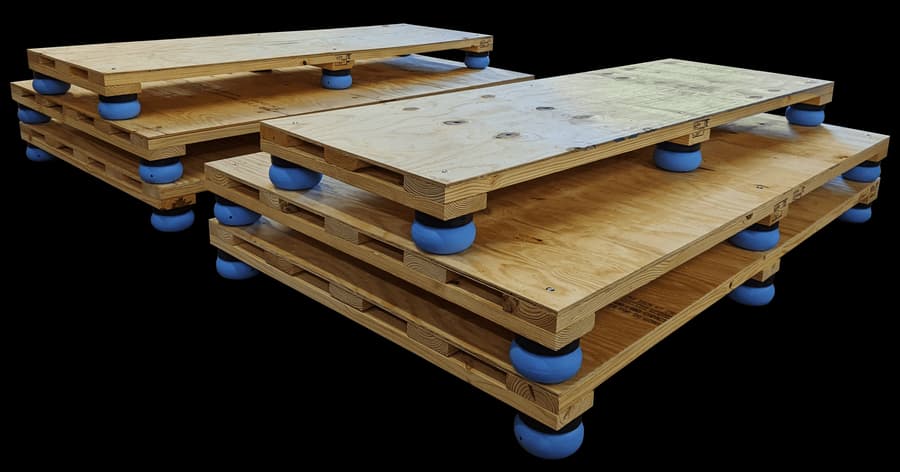
Not all materials used on pallets require heat treatment. If you are shipping using “engineered wood” or alternative materials, you may be exempt from ISPM 15.
- Plywood & OSB Pallets: Engineered wood is processed with high heat/glue that would eliminate pests.
- Press-Wood / Molded Wood Pallets: made from small wood chips and shavings so there is no concern for pests.
- Plastic Pallets: non-wood product so there is no concern for pests.
- Corrugated (Cardboard) Pallets: made from wood pulp and intense processing that would kill pests.
- Composite Wooden Palletblocks: made using high pressure and temperature with glue and wood chips that would eliminate pests.
- Wood Thinner Than 6mm: Any raw wood that is 6mm (0.24 inches) or less in thickness is exempt. This often applies to thin veneers or light crating components.
- Barrels for Wine & Spirits: This is a specific exemption because the manufacturing process for barrels (which involves heating/toasting) effectively treats them.
The risks of non-compliance
What happens if you ship goods on untreated wood pallets to a participating country? The consequences can be severe and expensive.
- Quarantine & Denial of Entry: The destination port may refuse to let your goods enter the country.
- Fumigation Fees: Many ports of entry have fumigation services nearby. You may be able to have your goods transported to them and fumigated before the port releases them. This would still cause a delay and come at premium emergency prices though.
- Repackaging Fees: You may be forced to pay a third party to offload your goods and move them to compliant pallets at the port, again causing delays and be charged at premium emergency rates.
- Destruction or Re-Export: In worst-case scenarios, the port authority may incinerate the packaging or order the entire shipment to be shipped back to its origin at your expense.
Frequently asked questions (FAQ)
Technically, the stamp on the wood itself acts as the certificate. However, some countries or specific buyers may request a document verifying the treatment. We provide certification documentation upon request to give you extra peace of mind.
Get reliable, ISPM certified pallets and crates from Vol Case & Container
Don’t gamble with international customs. Whether you need standard pallets, custom crates, or dunnage, we have the processes and certifications to get your product where it needs to go.
For specialized requirements or to explore custom pallet or crate solutions designed for both protection and international regulation, consider reaching out to experts in the field. Contact Vol Case & Container for a free consultation and quote on your custom pallet or crate needs.
About Vol Case
Vol Case & Container is the oldest custom crate and case manufacturer in the East TN area. Founded over 30 years ago, all of our protective packaging solutions are still designed and assembled at our facility in Oak Ridge, TN. We specialize in custom wood crates, ATA cases, wood or plastic containers, injection molded cases, and waterjet or CNC cut foam inserts. Our customers span a variety of industries including nuclear, government, aerospace, military, medical, R&D, and more. Our team has experience designing and building everything from huge wood crating for 70,000+ lbs machinery to small injection molded cases for key-sized objects. Whatever your needs, our team works on quick turnaround times to provide you with high quality protective packaging. Contact us today for a free quote.
Tell us about your project
What do you
need to protect?
Tell us what you need to pack, how it will travel and when you need it. We can help you choose a case, foam insert or wood crate.
- Free design and quoting
- Direct access to our team
- No obligation to purchase