Case with custom foam
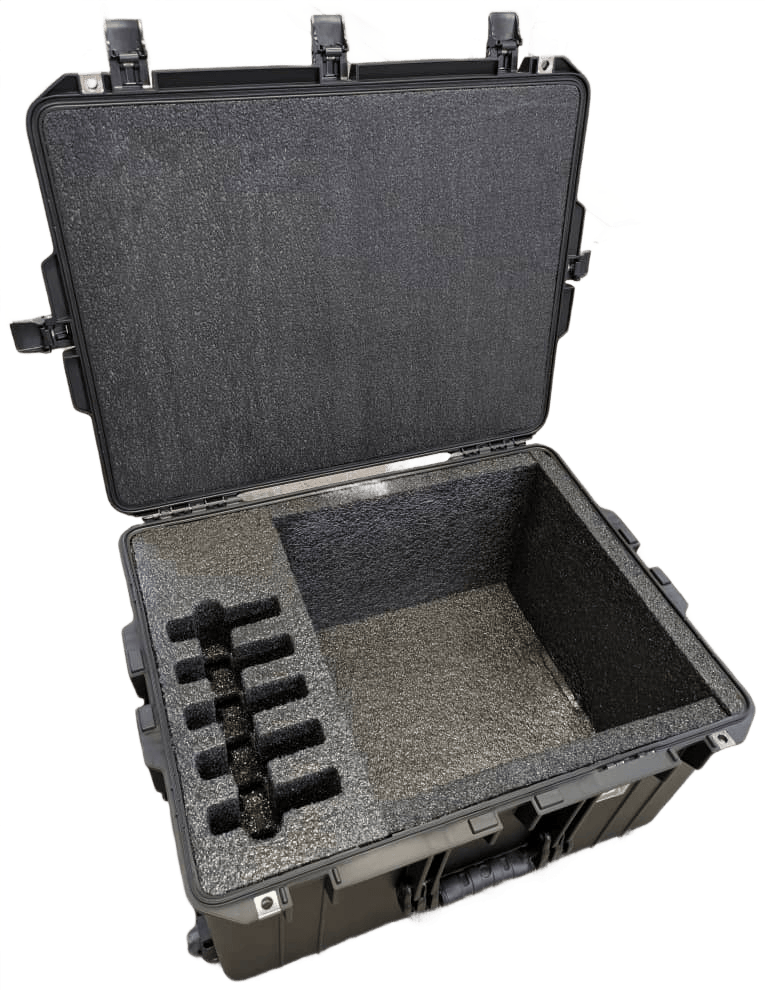
We help choose an available case model and design its interior for the equipment, accessories and packing sequence.

Military equipment packaging
A supplied hard case with an interior designed for your kit.
Vol Case supplies Pelican, SKB, NANUK and Condition 1 cases and designs custom foam for military equipment, defense prototypes and field kits. We work with equipment manufacturers, system integrators and defense startups, from changing hardware through repeat production. Cases and foam are available to companies nationwide.
Free design & quoting. No obligation.

Order an empty case, a foam insert for an existing case, or a complete case and foam package.
Give each component a defined place, with support, clearance and hand access where needed.
Review the design as your hardware changes, then retain the approved layout for later units.
Ways to order
We help choose an available case model and design its interior for the equipment, accessories and packing sequence.
Tell us the case model, interior dimensions and condition. We check the usable space before designing a new insert.
Explore custom foam insertsOrder a supplied shell without a custom interior. We confirm the selected model, features and availability for your order.
Compare supplied case rangesEquipment support
The foam needs to hold each item at suitable contact points. We use the equipment shape and weight to plan the pocket, including areas that must remain clear of pressure.
Relief areas can keep foam away from connector pins, switches, lenses and other delicate features while the main body of the part remains supported.
Stepped, angled or curved pockets can support parts that do not have a flat underside. We review the space above each item as well as its footprint.
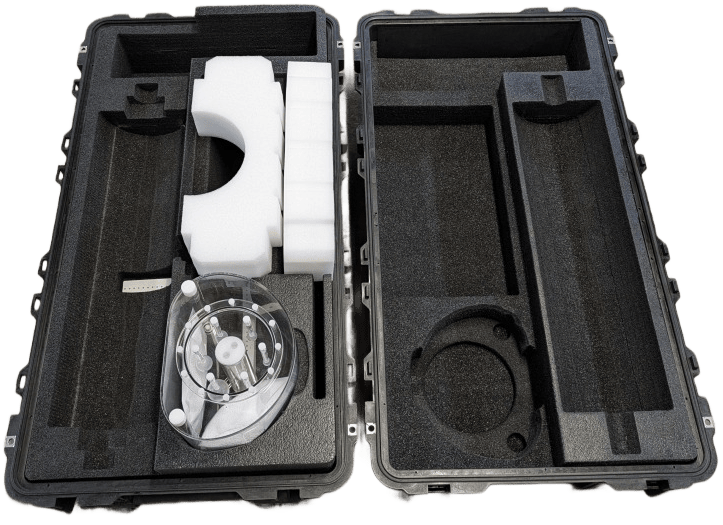
When parts are stored in both halves of the case, we plan their retention and clearance together. Lid-mounted items should not contact the equipment below when the case closes.
Your options
We choose the foam and layout for the component weights, contact surfaces and how often the kit will be unpacked.
Common applications
We plan around the equipment and how it is used. The linked case studies describe specific completed projects and the decisions made for those kits.
For a military drone program, we organized 56 components in Pelican 1745 Air cases, with pin clearance and retained lid storage. The packaging has gone through 41 design revisions as the equipment evolved, with 2,500+ cases produced for the program.
Read the military drone case studyFor a drone-industry components supplier, we used customer CAD to print a model part and check a controller's fit in custom foam. The SKB 3i-0907-6 layout used stepped pockets for the controller, cables and accessories.
Read the controller case studyA medical kit for a military end user was consolidated from three cases into one Pelican 1780 holding 28 components. Its approved layout was repeated across 65 units. The loaded kit weighed about 85 lb, making handling part of the design decision.
Read the medical kit case studyPlan fixed locations for radios, data drives, power supplies, cables and spares. For server equipment, identify any rack, mounting and access needs so we can review a suitable case format.
Our process
Design and quoting are free, with no purchase obligation. We work through fit and usability before you approve the design for production.
Provide the component list, weights, dimensions or CAD, intended use and delivery needs. Identify parts still changing. Contact us before sending controlled technical information so we can arrange an approved transfer method.
We choose an available shell and prepare the foam design for your review. Check component positions, support, hand access and the order in which parts will be packed and removed.
We help determine which fit checks are useful for your equipment. A physical prototype or a model part printed from CAD can be discussed and quoted separately. We revise the design from your feedback before approval.
We retain approved designs and production information for repeat orders. Identify the equipment version each time, and tell us about replacements or upgrades. We confirm case availability and review changes before building further units.
Tell us the delivery date, quantity and any staged releases you need. Timing depends on case availability, materials, design changes and approval.
Frequently asked questions
Contact us to discuss product selection, design requirements or an order.
No single rating applies to every case we supply. We check the manufacturer's documentation for the selected model and the conditions covered. A shell rating also does not automatically establish that the complete equipment and foam package meets your program's test requirements.
Read military and aerospace packaging guidanceTell us about your project
Tell us what you need to pack, how it will travel and when you need it. We can help you choose a case, foam insert or wood crate.