A completed crate
Have a crate built to the approved dimensions and delivered ready for loading. Confirm the access and handling equipment available at your facility.

Military equipment packaging
Support large equipment through shipping and storage.
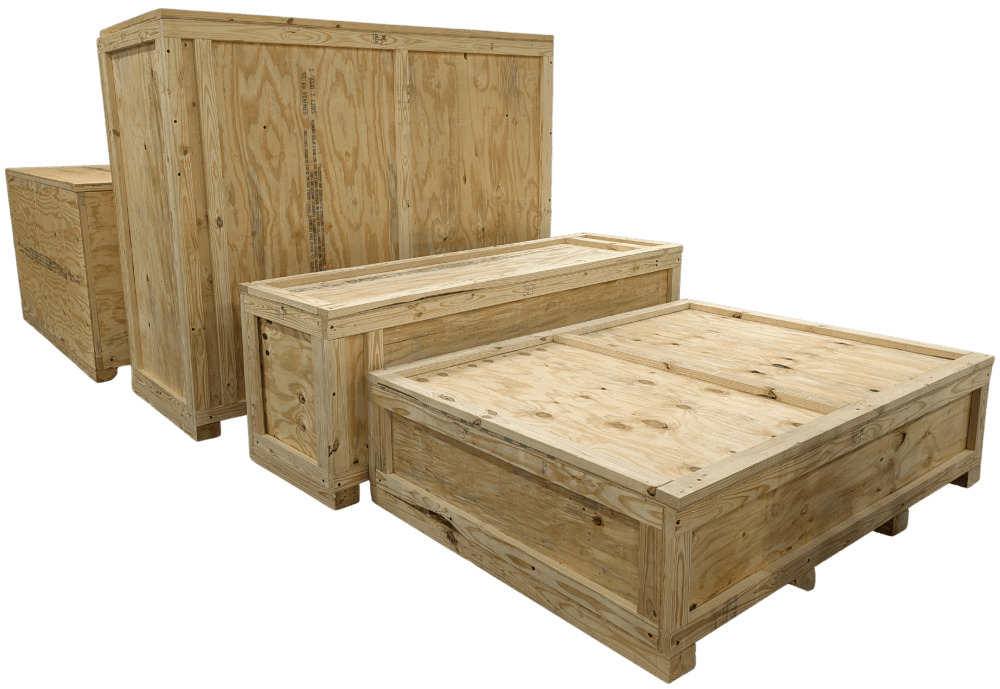
Vol Case designs and builds ISPM-15 certified custom wood shipping crates for large military equipment, sensitive systems and irregular assemblies. We plan the base, supports, openings and protection around the load and its journey. We supply crates to companies throughout the eastern United States.
Free design & quoting. No obligation.

Size the base and supports for the equipment weight, shape and safe attachment points.
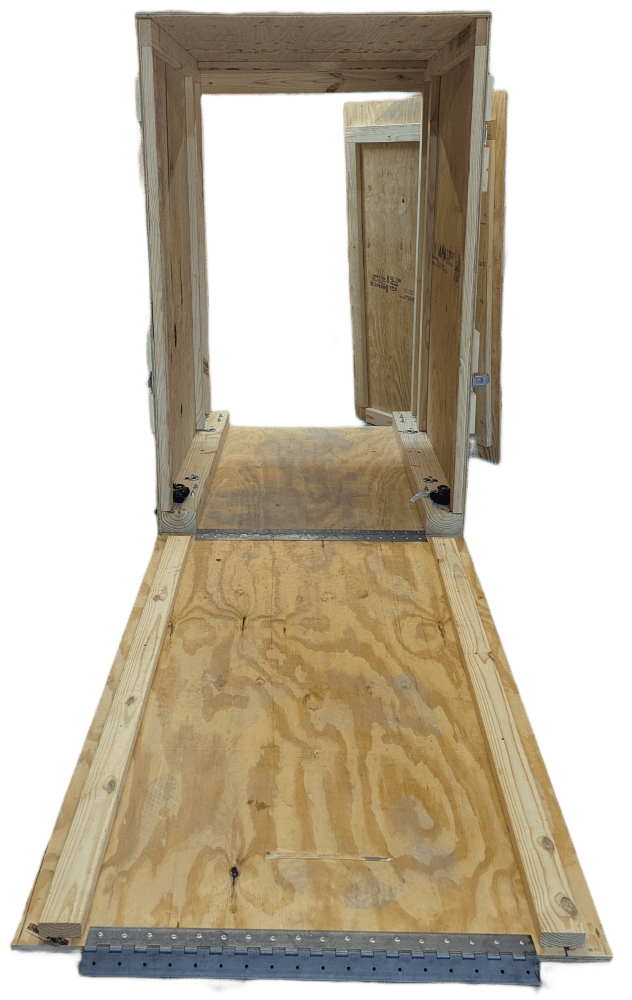
Plan removable panels, ramps and lifting access for the equipment available at pickup and delivery.
Review moisture protection, identification and the actual packing requirements for your project.
Ways to order
Have a crate built to the approved dimensions and delivered ready for loading. Confirm the access and handling equipment available at your facility.
For suitable projects, we can plan crating at your facility when the load is difficult to move or a completed crate is too large to deliver. This can include waterproof barrier bagging with desiccant.
Explore on-site cratingA crate supplied in separate sections takes up less space before it is needed. We plan the assembly method and explain how the equipment will be loaded and secured.
Base and supports
A custom wooden crate needs to hold the equipment in place as well as enclose it. We design the base based on the equipment weight and handling requirements. Then we add supports and blocking where the equipment can safely rest or be secured.
We design the base for the equipment’s weight, where that weight sits and how it will be lifted. All our crate bases provide clearance underneath for forklifts and pallet jacks.
Supports follow the load's shape and strong points. We can use blocking, shaped cradles, bolts, bands or straps where the equipment allows them, with padding at suitable contact surfaces.
Foam can cushion contact points and separate sensitive components or accessories. Tell us which surfaces can carry weight and where connectors or other delicate features need clearance.
Preservation and identification
All wood crates we make are ISPM-15 certified and stamped. This addresses wood-packaging requirements; it does not establish compliance with every military specification or rule for the cargo and its import.
We can add painted callouts, part numbers, handling instructions and other specified identification. Provide the required wording and placement, including any center-of-mass or lifting information.
If the contract specifies a barrier material, packing method or documentation, share the requirement before we quote. We confirm the materials and work for the particular shipment rather than assuming one method meets every specification.
Your options
We select these features for the load, handling equipment and expected reuse.
Common applications
The crate design follows the actual load. These examples describe equipment and shipment needs we can discuss for your project.
Plan supports and restraints for loads that are too large or irregular for a portable case. We review lifting access and the order in which blocking or panels must be removed.
Read large transport packaging guidanceKeep sensitive connections clear of supports and plan moisture protection for the route and storage period. Accessories can be packed separately within the shipment where needed.
Plan room for the main equipment, tools, gauges and associated parts. Identify wheeled equipment, items needed first and components that need their own supports.
Our process
Design and quoting are free, with no purchase obligation. We review the equipment, packing location and shipment details before you approve the work.
Share dimensions, weights, drawings, quantities and the delivery schedule. Contact us before sending controlled technical information so we can arrange an approved transfer method.
Check the base, support points, restraints, openings and any barrier bagging. We determine whether to supply a completed crate, deliver sections or plan work at your facility.
All openings, supports and lifting access are designed and approved by you before production begins. A physical prototype is optional and quoted separately if needed.
We build from the approved design and coordinate the packing and receiving schedule. For repeat orders, identify the equipment version and any changes to the load or shipment requirements.
Timing depends on design, materials, quantity, site arrangements and approval. Discuss storage and staged delivery if completed crates are needed at different times.
Frequently asked questions
Contact us to discuss product selection, design requirements or an order.
We review the applicable specification and revision, required materials, preservation method, markings, tests and documentation for each project. Send these requirements early so we can confirm what we can provide. A custom crate or an ISPM-15 stamp alone does not establish military compliance.
Read military and aerospace packaging guidanceTell us about your project
Tell us what you need to pack, how it will travel and when you need it. We can help you choose a case, foam insert or wood crate.