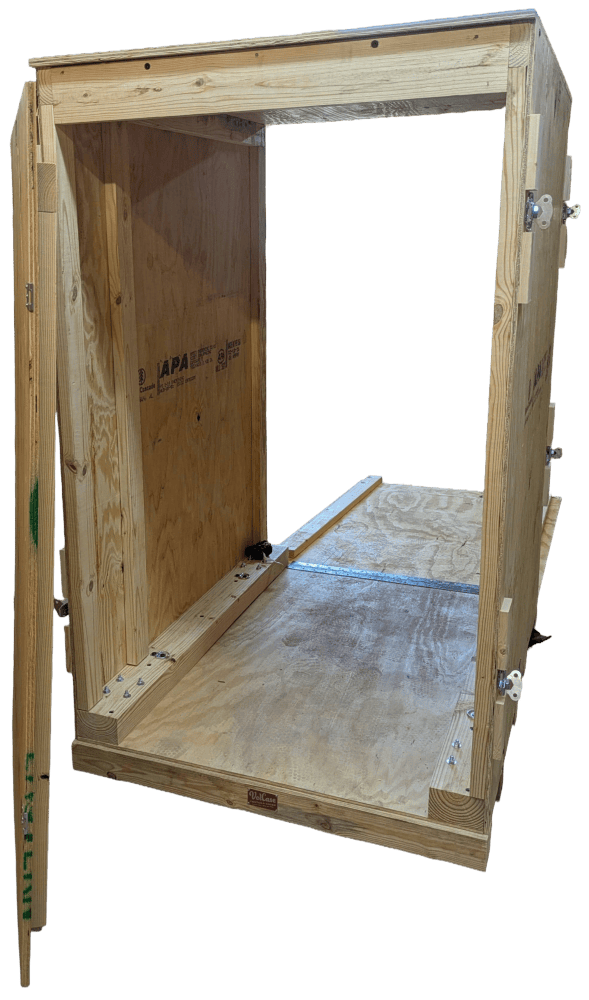
A completed crate
Have a crate built to the approved dimensions and delivered ready for loading. Confirm the access and handling equipment available at your facility.

Laboratory and research equipment
Support large instruments from packing through delivery.
Vol Case designs and builds ISPM-15 certified custom wood shipping crates for laboratory instruments, automated lab systems and large research assemblies. We plan the base, supports and openings around the equipment, how it will be moved and where it will be unpacked. We supply crates to companies throughout the eastern United States.
Free design & quoting. No obligation.

Plan contact points and restraints around the instrument's weight, shape and handling instructions.
Choose openings, ramps and handling access for the equipment available at each facility.
Plan return shipments and review updated dimensions before repeating a crate design.
Ways to order
Have a crate built to the approved dimensions and delivered ready for loading. Confirm the access and handling equipment available at your facility.
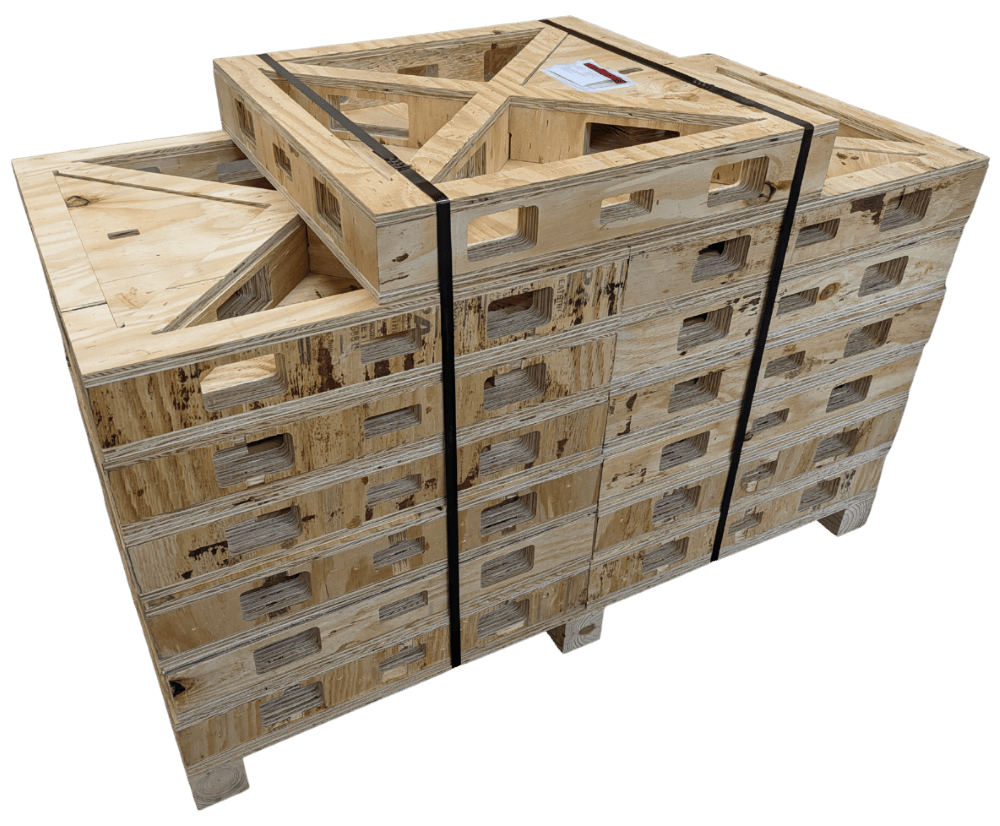
For suitable projects, we can plan crating at your facility when the load is difficult to move, a completed crate is too large to deliver or the packing needs specialized tools and skills. This can include waterproof barrier bagging with desiccant.
Explore on-site cratingA crate supplied in separate sections takes up less space before it is needed. We plan the assembly method and explain how the equipment will be loaded and secured.
Base and supports
A custom wooden crate needs to hold the equipment in place as well as enclose it. We design the base based on the equipment weight and handling requirements. Then we add supports and blocking where the equipment can safely rest or be secured.
We design the base for the equipment’s weight, where that weight sits and how it will be lifted. All our crate bases provide clearance underneath for forklifts and pallet jacks.
Supports follow the load's shape and strong points. We can use blocking, shaped cradles, bolts, bands or straps where the equipment allows them, with padding at suitable contact surfaces.
Keep supports away from optical surfaces, probes, tubing and other vulnerable parts. Identify which components must stay attached and which can travel separately.
Wood treatment and identification
All wood crates we make are ISPM-15 certified and stamped. This addresses wood treatment and marking. Customer packing specifications, requirements for the equipment and other destination rules need separate review.
We can add painted callouts, part numbers, handling instructions and other specified identification. Provide the required wording and placement, including any center-of-mass or lifting information.
Your options
We select these features for the load, handling equipment and expected reuse.
Common applications
These equipment groups have different support and access needs. We review the actual instrument and its packing instructions before choosing the crate features.
Identify the manufacturer's support points and the weight of each assembly. Review cushioning, restraints and lifting access for the complete shipment, including equipment packed alongside the main instrument.
Read large transport packaging guidancePlan support and clearance around the instrument's sensitive features. Share the manufacturer's transport limits, preparation instructions and checks required after delivery.
Read precision instrument packaging guidanceFor vessel assemblies, review support around fittings and removable parts. Plan panel access and a ramp where wheeled equipment will be loaded, with restraints suited to the equipment.
Identify the transport positions and securing requirements for moving arms and other assemblies. Keep accessories and loose parts separate from delicate components, and plan the order of unpacking.
Our process
Design and quoting are free, with no purchase obligation. We review the equipment, packing location and shipment details before you approve the work.
Provide the equipment details and shipment requirements from the planning checklist. Confirm the packing location, laboratory access and any material or cleanliness restrictions.
Check the base, support points, restraints, openings and any barrier bagging. We determine whether to supply a completed crate, deliver sections or plan work at your facility.
All openings, supports and lifting access are designed and approved by you before production begins. A physical prototype is optional and quoted separately if needed.
We build from the approved design and coordinate packing and delivery. We retain production information for later orders. Confirm the equipment version and review any changed dimensions or components before another build.
Timing depends on design, materials, quantity, site arrangements and approval. Discuss storage and staged delivery if completed crates are needed at different times.
Frequently asked questions
Contact us to discuss product selection, design requirements or an order.
We have experience crating equipment weighing over 70,000 lbs. Provide the dimensions, weight and lifting or support points so we can review the base and handling plan for your equipment. Previous projects do not establish a rated limit for a new crate.
Tell us about your project
Tell us what you need to pack, how it will travel and when you need it. We can help you choose a case, foam insert or wood crate.